A street address looks like a label attached to one building. Across a city, however, thousands of those labels form a shared system. They allow a spoken location to become a place that residents, emergency crews, postal workers and digital maps can find.
When the system is clear, it fades into the background. When it is missing or inconsistent, ordinary tasks become harder and urgent ones can become dangerous.
Numbers create an order along the street
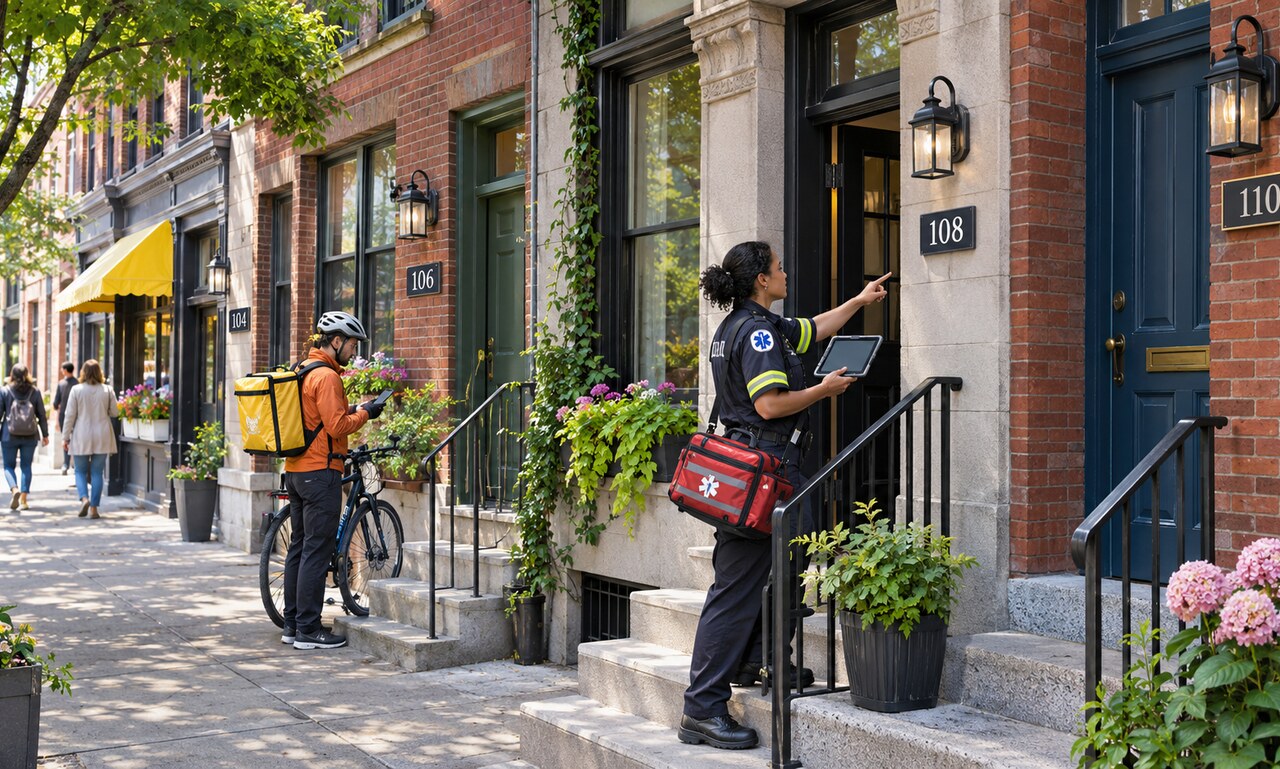
Many cities assign odd numbers to one side and even numbers to the other, increasing in a predictable direction. The size of each interval may relate to distance, blocks or future lots. That structure lets someone estimate where a building should be before they can see its entrance.
Corner properties, divided units and new developments complicate the pattern. Good addressing rules leave room for growth while avoiding duplicate or confusingly similar names.
The sign must work from the street
An official record is not enough if the number on the building is hidden, faded or too small to read. Placement, contrast, lighting and sightlines determine whether a visitor can identify the correct door. Multi-unit buildings need a clear relationship between the main address, individual suites and the entrance used to reach them.
Emergency response makes these details especially important. A minute spent searching for an unmarked doorway is different from a minute spent travelling toward a known location.
Addresses connect public systems
Utilities, building permits, elections, school assignments, waste collection and property records may all depend on an address. Delivery services and navigation tools build their own layers on top of the same civic foundation.
Yet not every meaningful place fits neatly into a conventional building number. Parks, trails, construction sites and rural roads may require location codes, marked access points or coordinates. A resilient system provides ways to describe those spaces without forcing them into the wrong format.
Names carry history as well as direction
Street names can preserve local geography, languages and public memory. Renaming can recognize change, but it also requires careful updates across signs, records and the daily habits of residents. Clear transition periods reduce confusion while a new name becomes established.
Addresses are easy to dismiss as administrative detail. In reality, they are a public language for place. A city that maintains that language carefully makes itself easier to navigate, serve and understand.
READ NEXT