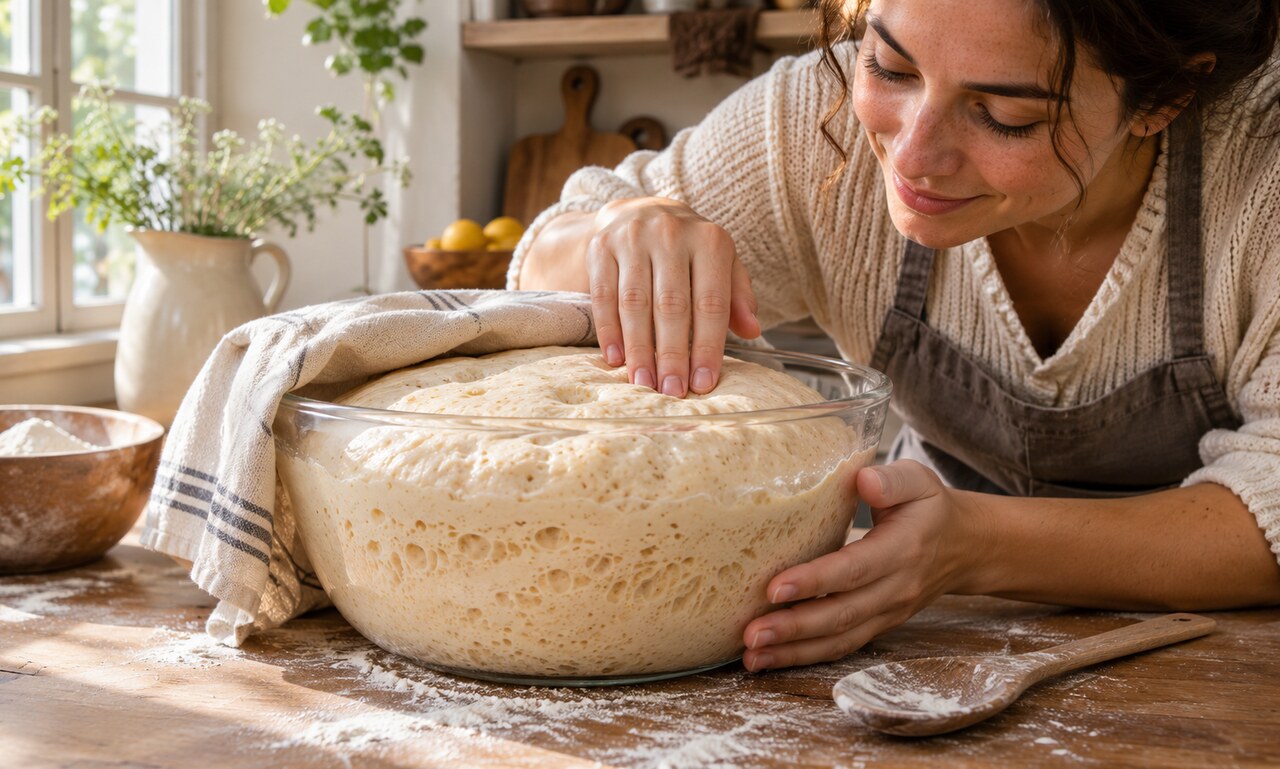
Flour, water, salt and yeast can begin as a heavy, sticky mass. Given time, the dough expands and becomes filled with bubbles. The change depends on two processes working together: fermentation produces gas, and the dough develops a structure capable of holding it.
Yeast feeds on available sugars
Yeast is a living microorganism. Enzymes in flour help break starch into simpler sugars, which yeast can use for energy. During fermentation, it produces carbon dioxide and compounds that contribute to flavor and aroma.
The carbon dioxide enters tiny pockets of air already present in the mixed dough. As more gas accumulates, those pockets expand.
Gluten forms a flexible network
Wheat flour contains proteins that link into gluten when hydrated and mixed. Kneading, folding and time help organize this network. It needs to stretch around growing gas bubbles without tearing, much like a collection of thin elastic walls.
Too little development allows gas to escape. An overly weak or damaged structure may rise and then collapse. Different flours produce different strengths, which is why a delicate cake and a chewy loaf need different handling.
Temperature controls the pace
Warm conditions generally speed yeast activity, while cool conditions slow it. Faster is not always better. A long, cool fermentation gives enzymes and microbes more time to create flavor and can make the schedule easier to manage.
Excessive heat can harm or kill yeast. Salt slows fermentation and strengthens dough, while very high amounts of sugar or fat change how readily yeast can access water.
The oven completes the structure
When dough enters a hot oven, gases expand and yeast briefly becomes more active. This early growth is called oven spring. As temperature rises, yeast activity stops, starches set and proteins firm, fixing the bubbles into the crumb.
Steam keeps the surface flexible at first and helps the loaf expand before the crust hardens. Later, browning creates color and roasted flavors.
A risen loaf is therefore not simply inflated dough. It is a temporary living system transformed by heat: gas production, elastic structure and careful timing become the open texture that remains after baking.
READ NEXT