Bicycle parking is a small piece of infrastructure with an outsized effect on a trip. A safe route may bring someone to a shop, library or workplace, but the journey is not complete until the bicycle can be secured without blocking a doorway or crowding a sidewalk.
Distance changes whether a rack is used
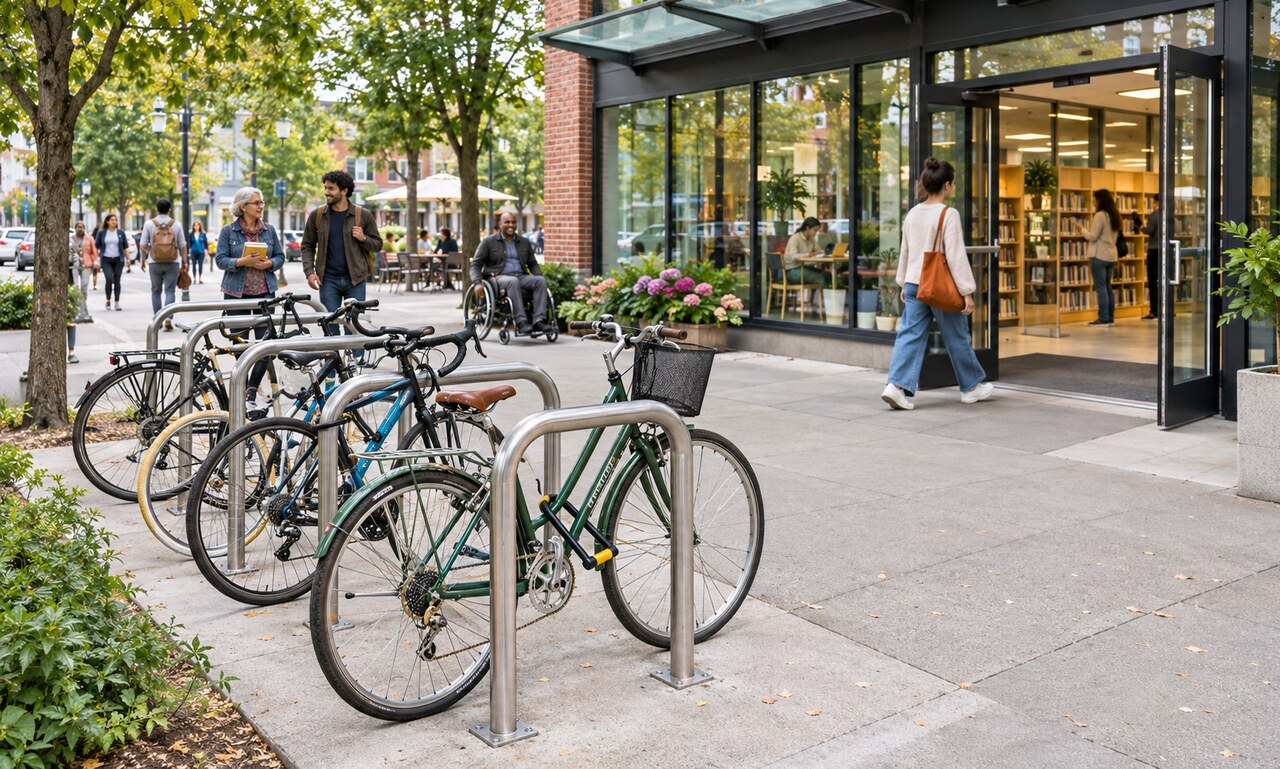
For short visits, riders look for parking close to the entrance. A rack hidden around a corner or placed at the far edge of a car park may be ignored in favour of a signpost, railing or tree. The result is clutter even when official parking technically exists.
A visible rack near the door offers another benefit: passing people and building activity provide informal observation. Visibility does not eliminate theft, but it makes tampering less private.
The rack must support the frame
A useful design lets a standard lock secure the bicycle frame and at least one wheel. It should support the bike at two points so it does not tip or twist. Racks that hold only a front wheel can damage it and leave the frame vulnerable.
Spacing matters too. If racks sit too close together, handlebars and pedals collide, reducing the number of spaces that can actually be used.
Placement should protect the walking route
Parked bicycles need their own footprint. Racks should not narrow an accessible path, interfere with curb ramps or force people stepping from a vehicle into moving handlebars. Clear space around the installation helps riders lock up without standing in the stream of pedestrians.
Weather protection is valuable for longer stays, while lighting improves use after dark. At busy destinations, several small groups of racks can be more convenient than one distant cluster.
Good parking makes an invitation visible
Near-door bicycle parking signals that arriving without a car is normal and expected. It can turn a quick errand into a practical bike trip and reduce improvised parking on street furniture.
The hardware is modest, but the message is clear: the city has considered the entire journey, including the final few metres between the street and the door.
READ NEXT