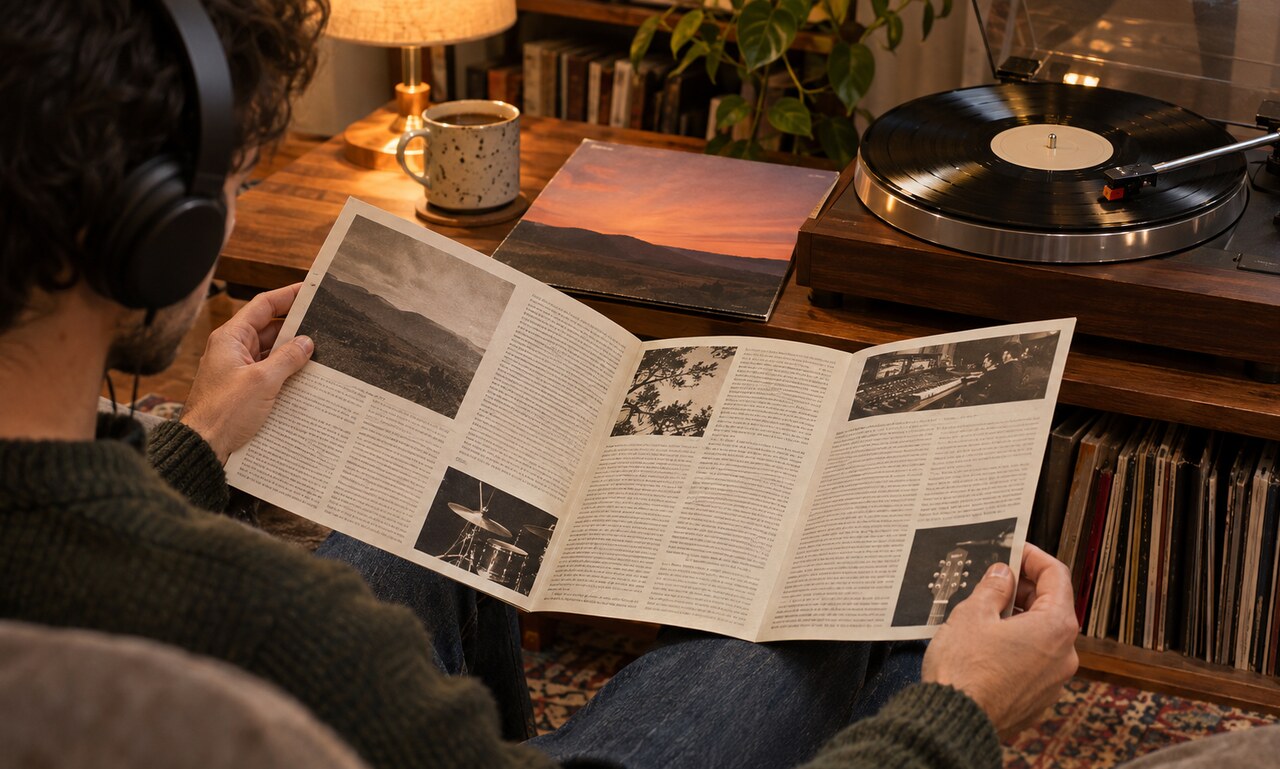
Music can reach a listener without explanation, but liner notes offer another way into the work. Tucked inside a record sleeve or booklet, they identify the people in the room, record when and where the sessions happened, and sometimes explain how an album found its form.
Credits reveal collaboration
A performer may be the name on the cover, yet a recording can also depend on writers, arrangers, engineers, producers, session musicians, assistants and designers. Detailed credits make that network visible. They help listeners follow a musician across projects and recognize creative work that would otherwise remain anonymous.
Even small details matter. Knowing which player enters on one track or who arranged a string section changes the way a later listen unfolds.
Context can deepen the sequence
An essay may place the album within a scene, a period or a turning point in an artist's life. Track notes can describe the origin of a song or the conditions of a live recording. Archival releases often use this space to explain what survived, what was restored and how the final sequence was assembled.
Context should not dictate a single meaning. The strongest notes provide evidence and perspective while leaving the music open to the listener.
The package creates a pace
Reading while a record plays encourages attention to the album as a sequence. Photographs, lyrics and design extend the visual world introduced by the cover. The act of turning pages or following a personnel list can slow listening down without interrupting it.
Digital releases can preserve this experience, but credits are often scattered across menus or omitted. A well-organized digital booklet can make the information searchable and accessible without losing the sense of a complete object.
Documentation becomes history
Years later, liner notes may be one of the clearest records of who contributed to a session. Researchers, journalists, musicians and fans rely on them to reconstruct connections that memory alone cannot hold.
Liner notes do not make the music more valid. They make its making more visible. In a few pages, an album becomes not only a collection of sound but also a record of labor, place and shared attention.
READ NEXT