A cast-iron skillet is durable, but it is not maintenance-free. Water can create rust, thick oil can become sticky and burnt residue can build into an uneven surface. A short routine after cooking prevents most problems.
Clean while the pan is manageable
Let the skillet cool enough to handle safely, then wash it with warm water and a brush or non-scratching scrubber. A small amount of ordinary dish soap is generally fine on a well-seasoned pan. The seasoning is bonded oil, not a loose layer that disappears with one gentle wash.
For stuck food, simmer a little water briefly or use coarse salt as a mild abrasive. Avoid long soaking because exposed iron can rust.
Dry with heat as well as a towel
Wipe the skillet, then place it over low heat for a few minutes so moisture evaporates from the surface and pores. Pay attention to the handle and underside. Turn off the heat once the pan is fully dry.
If rust appears, scrub it away, rinse, dry and rebuild the affected seasoning rather than covering rust with more oil.
Use less oil than seems necessary
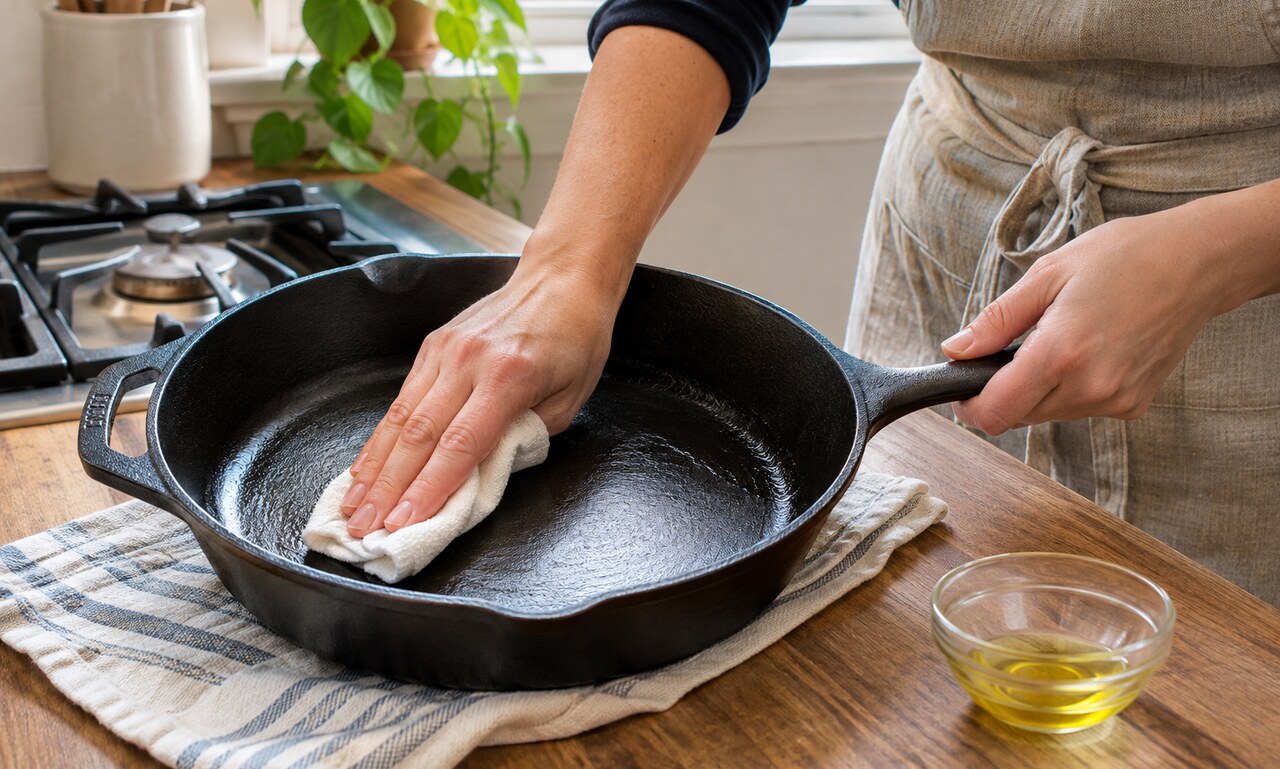
While the pan is warm, wipe on a small amount of neutral cooking oil with a high smoke point. Then use a clean cloth to remove as much as possible. The surface should look satin-smooth, not wet. A thick coat can polymerize unevenly and feel tacky.
Regular cooking with moderate amounts of fat gradually strengthens the surface. Very acidic dishes can be cooked in established cast iron, but long simmering may affect a newer or weaker seasoning.
Store it dry and open
Keep the skillet in a low-humidity place with air circulation. If pans are stacked, place a dry cloth or paper towel between them to protect the surface and absorb stray moisture. Do not seal the skillet while it is still warm or damp.
Cast iron does not need to remain visually perfect. Color varies, and a working pan develops marks. The useful signs are simpler: no rust, no sticky film and a surface that releases food more easily with continued use.
READ NEXT