A street market changes the role of a block for a few hours. Space normally used for moving or storing vehicles becomes a place for produce, crafts, food and conversation. The transformation works best when the temporary layout respects the permanent neighborhood around it.
A clear route organizes the market
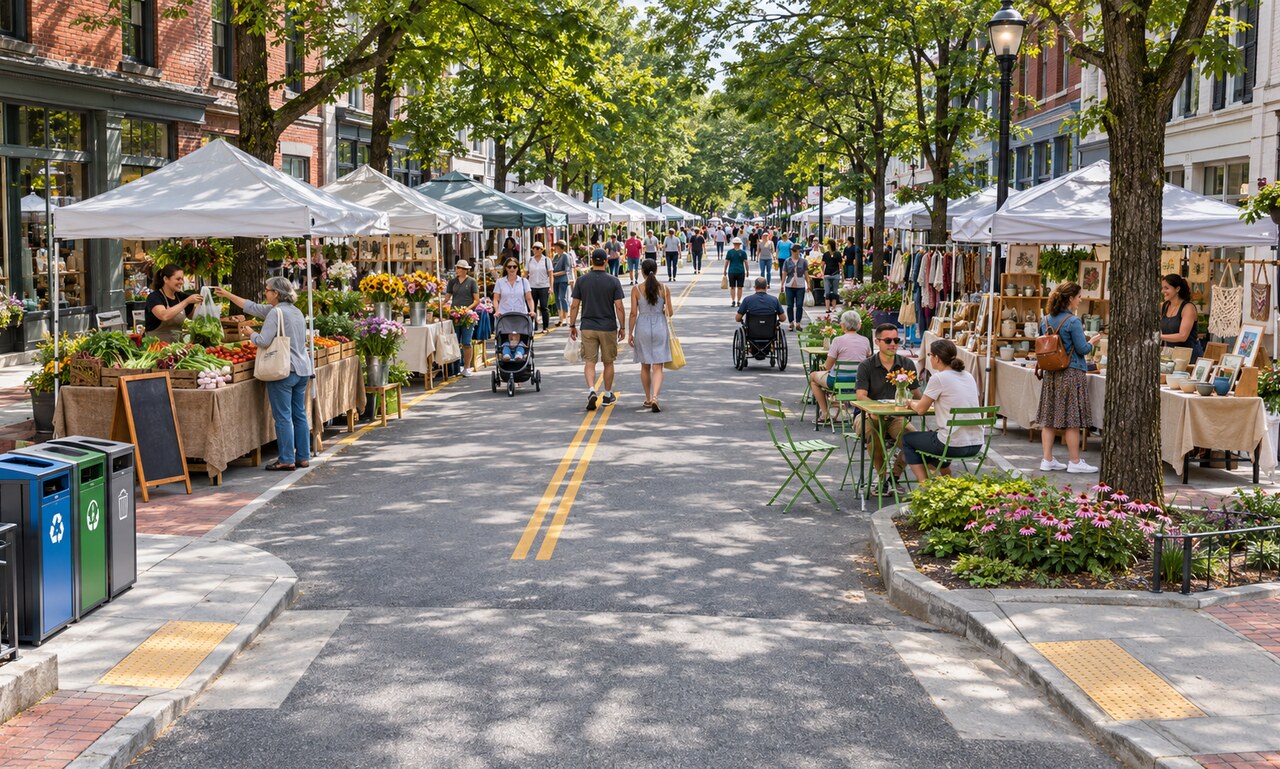
Stalls need enough depth for displays and work areas without narrowing the central aisle into a bottleneck. A continuous accessible path should connect entrances, crossings, toilets and transit. Cables, tent weights and signs belong outside that route or need safe covers.
Emergency and service access must remain legible even when the market is busy.
The edges need attention
Existing shops and homes should not disappear behind a wall of tents. Gaps between stalls can preserve doorways, sightlines and routes to the sidewalk. Nearby businesses may benefit from foot traffic when visitors can still see and reach them.
Loading plans matter before opening and after closing. Scheduled arrival times and designated spaces keep delivery vehicles from competing with early shoppers.
Basic services support the visible activity
Waste stations, water, power and hand-washing facilities affect how safely vendors can operate. Shade and seating give people a reason to stay, while clear signs explain hours, payment expectations and where different services are located.
Weather plans should address wind as seriously as rain. Tents need proper weights, and organizers need a threshold for closing when conditions become unsafe.
A market should fit its neighborhood
A useful mix of prices and products helps local residents participate rather than turning the event into a spectacle aimed only at visitors. Transparent vendor selection, reasonable fees and communication about noise or street closures build trust.
The strongest street markets feel temporary without feeling improvised. They create energy through careful logistics, then leave the block clean and functional when the tents come down. For one day, the street demonstrates that public space can carry commerce and community at the same time.
READ NEXT