A theater audience rarely sees a stage without light, yet lighting can feel invisible when it is doing its job. It establishes where to look, shapes bodies and objects, and gives the space an emotional temperature before a performer speaks.
Direction changes the face
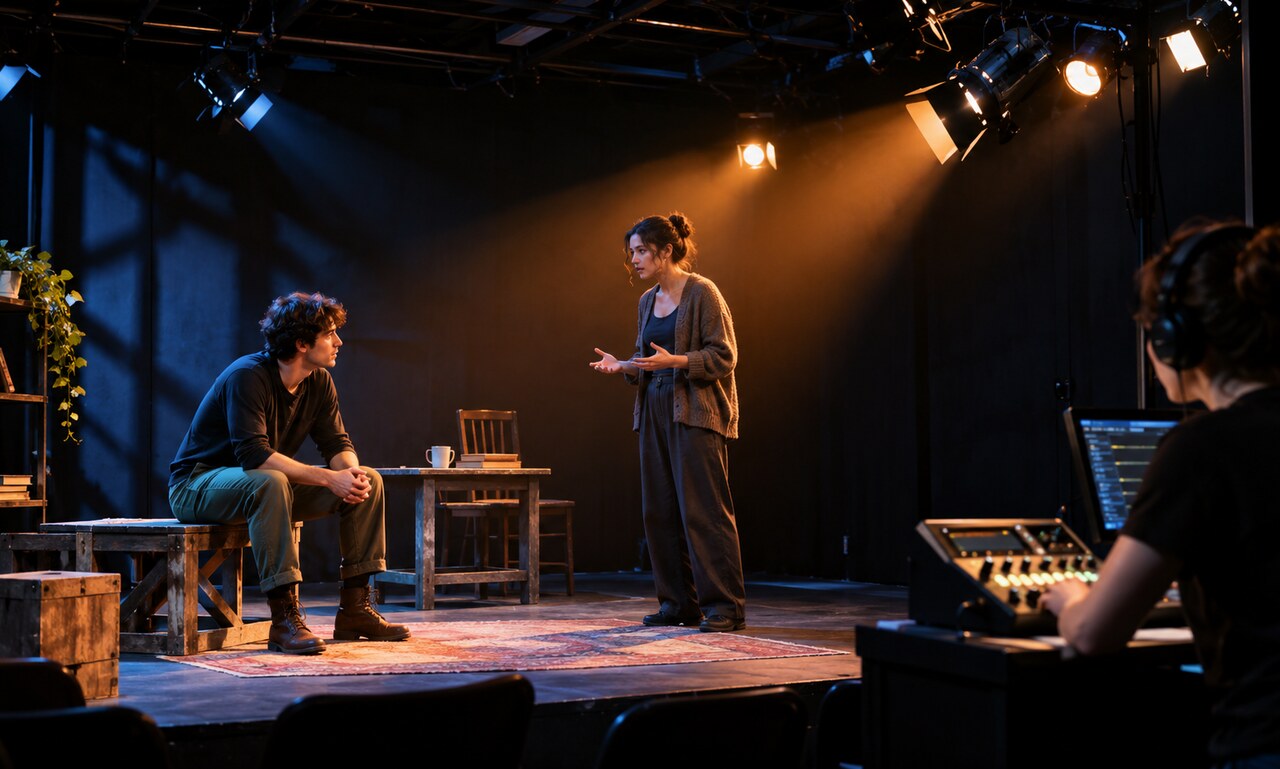
Light from the front makes expressions easy to read but can flatten texture. Side light reveals shape by placing brightness and shadow next to each other. Light from above may isolate a performer, while a low angle can make familiar features appear strange.
The angle also controls what the scenery reveals. A wall can look smooth from one direction and deeply textured from another. A doorway can become inviting or threatening without moving.
Color creates relationships
Warm and cool light do not carry a single fixed meaning, but they create contrast. An amber pool may suggest shelter against a blue background, while the same amber can feel harsh if it resembles industrial glare. Designers consider costumes, skin tones and painted surfaces because every material responds differently.
Modern fixtures can change color quickly, but restraint matters. A slight shift may be more powerful than a sudden saturated effect.
Brightness directs attention
The eye usually travels toward the brightest useful detail. By changing levels across the stage, a designer can guide the audience from one actor to another or let a background action emerge gradually. Darkness is not empty; it controls what remains uncertain.
Transitions also have rhythm. A fast blackout ends a moment sharply. A slow fade lets the audience stay with an image as it disappears.
Lighting is built through collaboration
The designer works with the director, scenery, costumes, sound and performers. Technical rehearsals test how cues feel at full scale and how safely actors can move between lit and unlit areas. Operators then repeat those cues with precise timing at every performance.
Stage lighting does not simply make action visible. It organizes perception. The same table, sentence and gesture can become private, comic or dangerous depending on what the light reveals—and what it allows the audience to imagine in shadow.
READ NEXT