Reusable shopping bags move between carts, car trunks, floors, counters and kitchens. They carry produce one week and household supplies the next. A small cleaning and storage routine keeps that convenience from becoming a source of odors, crumbs or cross-contamination.
Separate bags by purpose
Reserve one set for raw meat, fish and other packages that may leak. Keep another set for produce and ready-to-eat food, and use separate bags for cleaning products. Color, a stitched tag or a simple label makes the categories easy to remember.
Insulated bags deserve their own group because their seams and linings can trap moisture. Empty them immediately after returning home.
Follow the material
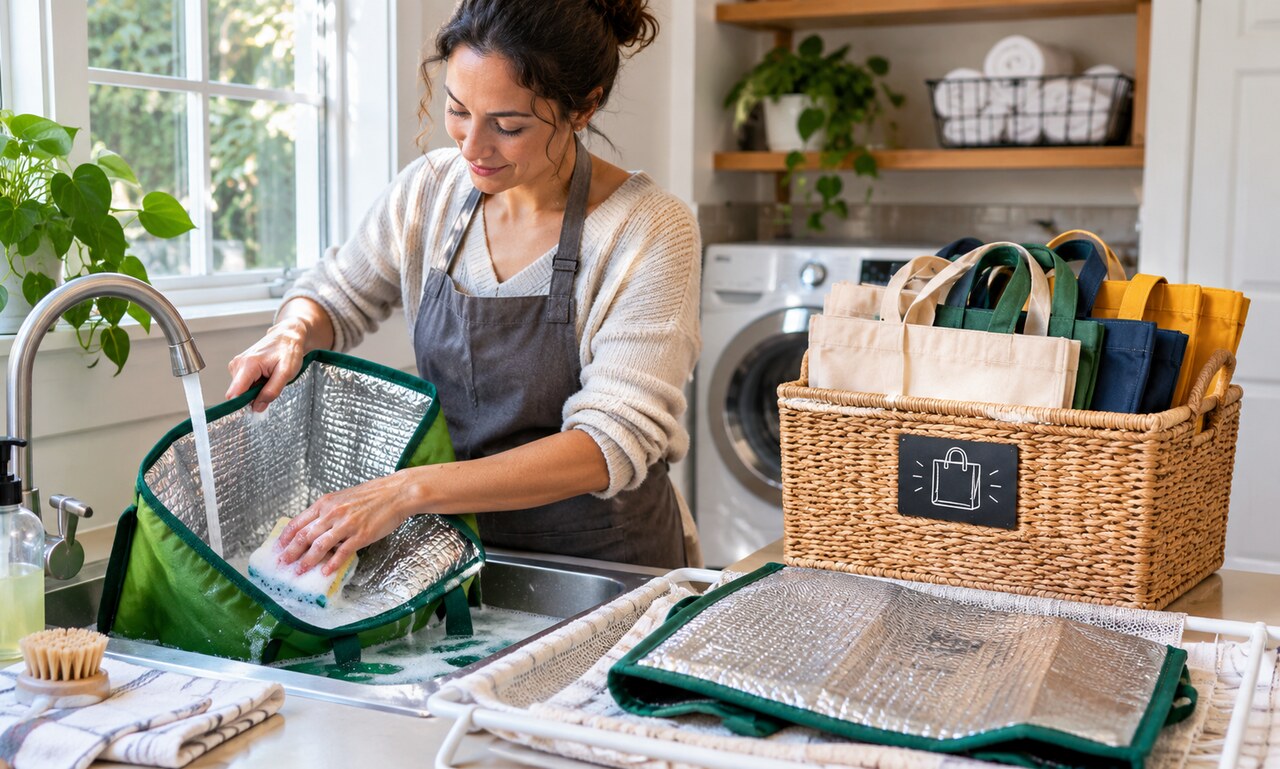
Cloth bags can often go through a washing machine, but check the care label for water temperature and drying instructions. Hand-wash laminated or insulated bags with warm soapy water, paying attention to corners, handles and zippers. Wipe structured bags that should not be submerged.
Clean a bag promptly after any spill. Visible residue, odor or dampness is a better signal than a rigid calendar.
Dry completely before storage
Open bags fully and place them where air can reach the seams. Putting a damp bag into a closed basket or car trunk encourages musty odors. Insulated linings may need to remain turned outward until dry.
Inspect for torn handles, split seams and peeling interiors. A bag that cannot safely carry its load should be repaired or retired.
Make the return trip automatic
Choose one dry storage point near the door and keep a smaller set in the car if temperatures permit. After washing, return bags to that location rather than leaving them in the laundry area. Folding cloth bags inside one larger bag creates a portable kit.
Before shopping, check that the bags are empty and dry. Remove old receipts and food fragments, and include an insulated bag when the trip requires one.
Reusable bags work best as part of a loop: shop, empty, clean when needed, dry and return. A system that takes only a few minutes is more likely to follow the bags from one trip to the next.
READ NEXT