A drinking fountain is easy to overlook when it works. It occupies little space, asks for no transaction and serves a need in a few seconds. When it is missing or broken, however, a long walk, a hot afternoon or a child's visit to a playground becomes harder.
Public water is modest infrastructure with a broad reach.
Hydration extends public life
People use streets and parks for longer when basic needs can be met nearby. Fountains support walkers, runners, cyclists, outdoor workers, families and anyone who cannot easily carry enough water for the day.
They matter especially during hot weather. Shade, toilets, seating and accessible water work together to make public space safer and more welcoming. A fountain alone cannot answer extreme heat, but it is an important part of a practical response.
Access should not depend on a purchase
Bottled drinks are available in many commercial areas, but buying water is not the same as having public access to it. Shops may be closed, prices vary and a purchase can be a barrier. A maintained fountain treats drinking water as part of the shared city rather than as a retail convenience.
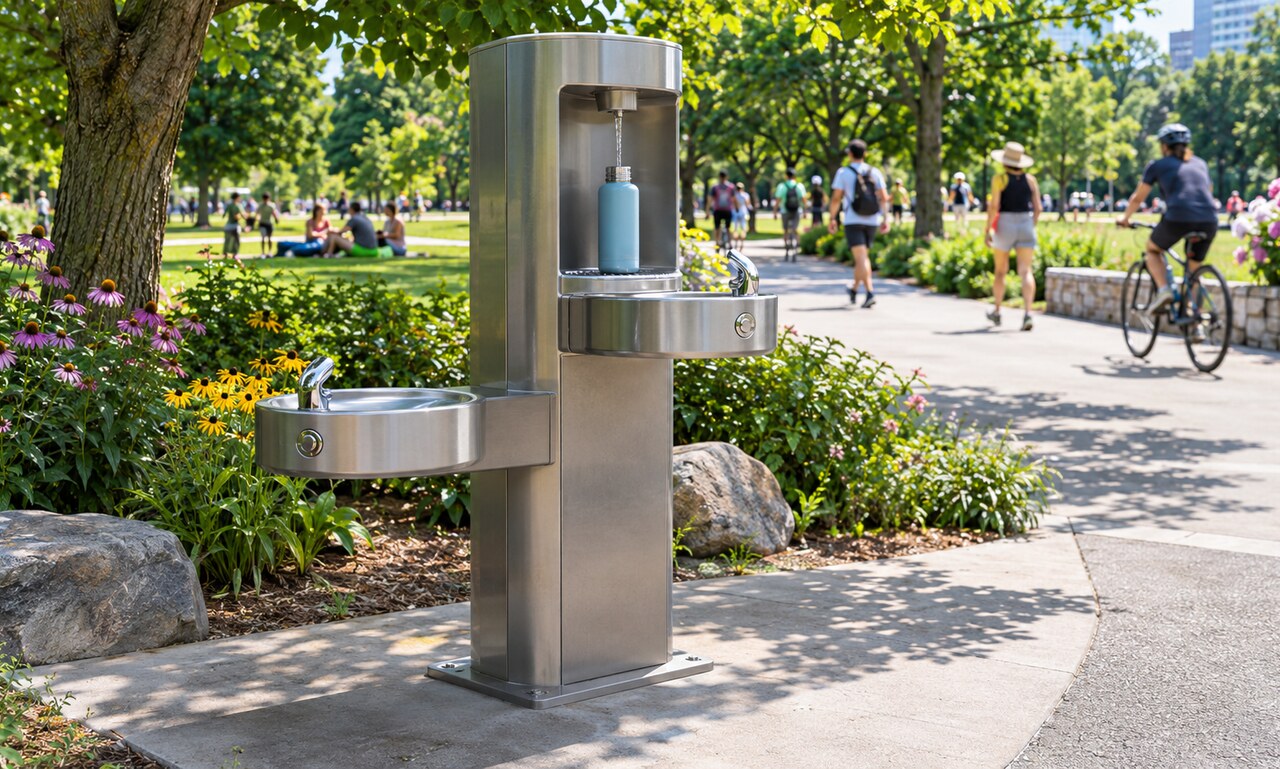
Bottle-filling stations extend that value. They help people reuse containers and reduce the need for single-use packaging while still offering a direct drinking spout where appropriate.
Design determines who can use it
Height, knee clearance, operating force and the position of controls affect accessibility. A useful installation may offer fixtures at more than one height, space for mobility devices and a nearby bottle filler. Drainage should keep the surrounding surface from becoming slippery.
Placement matters too. Fountains should be easy to find along busy walking routes, near play areas and transit, and where people exercise. Clear wayfinding can make a small piece of infrastructure much more effective.
Maintenance builds trust
People will not rely on a fountain that appears dirty, leaks or remains out of service. Regular cleaning, water-quality oversight, seasonal planning and visible repair reporting are part of the installation, not optional extras. In cold climates, freeze-resistant designs or clearly communicated seasonal shutdowns can prevent uncertainty.
A city reveals its priorities through the small services it makes ordinary. A dependable drinking fountain says that spending time outside should not require constant preparation or money. It gives everyone a simple reason to stay in the public realm a little longer.
READ NEXT