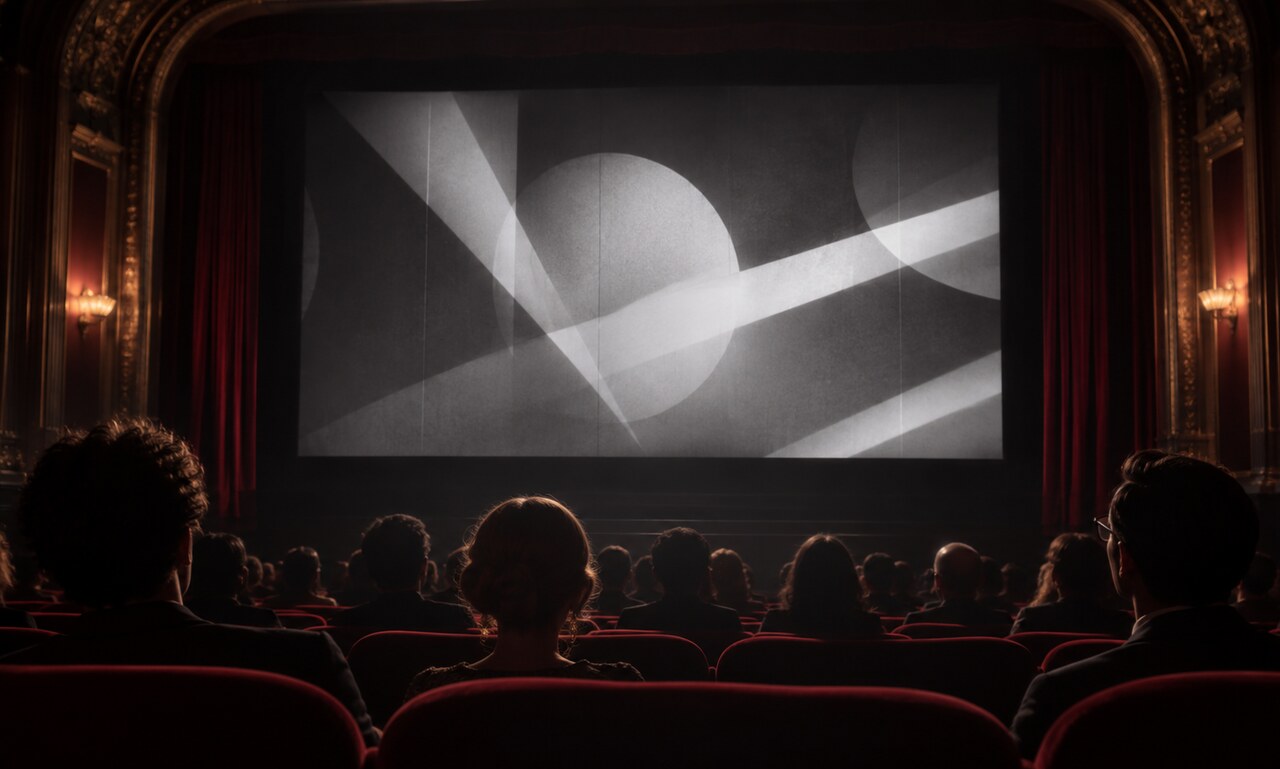
Opening credits are often treated as the final obstacle between an audience and the story. Streaming interfaces offer to skip them, theaters dim their lights and viewers wait for the first clear piece of action. Yet a carefully made title sequence is already part of the film.
It establishes pace before the plot begins. A name can arrive in silence, disappear into music or interrupt an image at exactly the moment the director wants us to pay attention.
The threshold belongs to the story
Every film needs a way to cross from the ordinary world into its own. Some begin abruptly, with motion already underway. Others use a slow sequence of landscapes, objects or faces. The credits can make that transition visible.
Typography, color and sound become narrative tools. Sharp lettering may promise tension. Hand-drawn titles can suggest intimacy or instability. A measured list of names over a quiet image tells us that the film expects patience.
Names are part of the experience
Credits also acknowledge that cinema is collaborative. The actors may be familiar, but the opening can introduce a composer, cinematographer, editor or production designer whose choices will shape everything that follows.
Reading every name is not required to understand a film. Still, allowing those names to share the screen reminds us that the finished work did not arrive from a single imagination. It was built through many forms of expertise.
Music begins the emotional argument
A title theme can establish feeling before the audience knows what it is feeling about. It may create confidence, unease, romance or distance. When the first scene finally arrives, the music has already prepared an emotional frame.
This is why skipping an opening can change more than timing. The viewer reaches the story without passing through the atmosphere designed to introduce it.
A sequence can stand on its own
The best opening credits are memorable as short works of design, but they remain connected to the film. Their images may return later with new meaning. Their rhythm may echo the editing style. Their apparent abstraction may turn out to contain a clue.
Credits do not need to be elaborate to matter. A simple title held for the right length can create expectation. A black screen and one sound can be enough.
The opening sequence asks for a small kind of trust: do not hurry past the doorway. The story has already begun.
READ NEXT