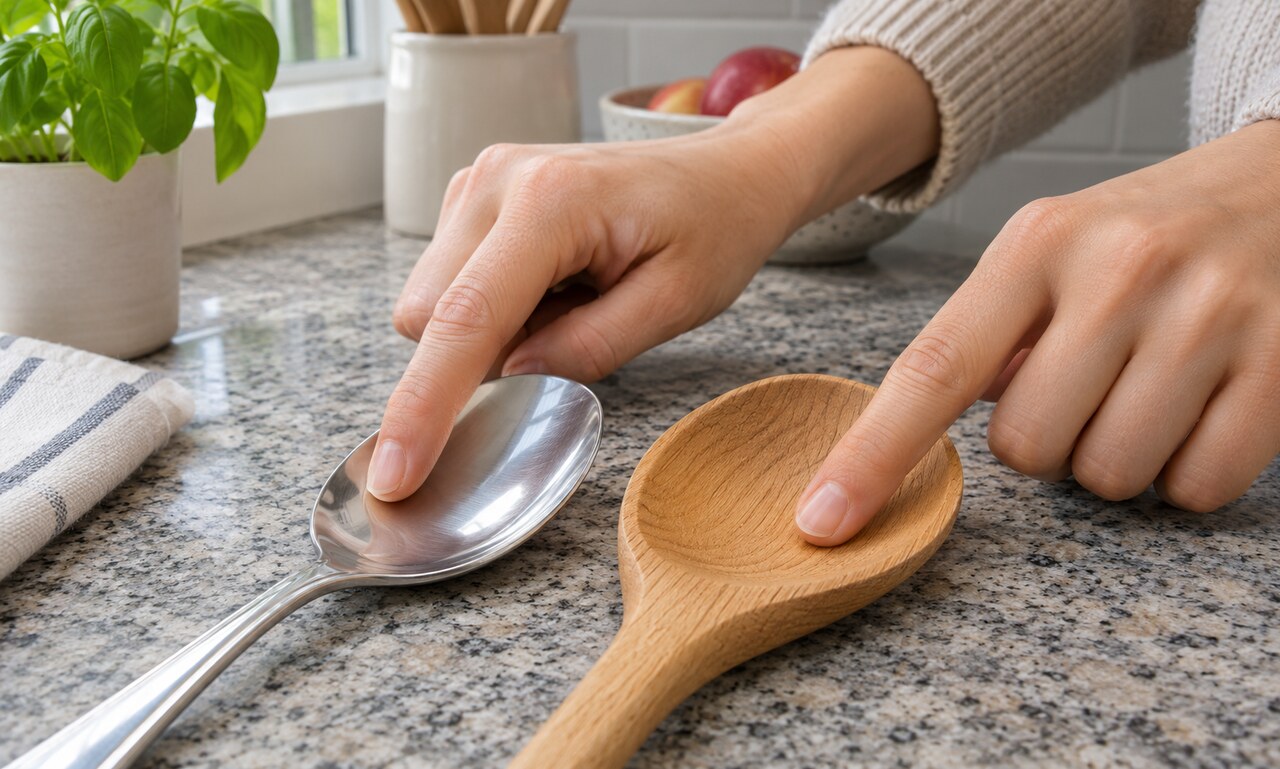
Touch a metal spoon and a wooden spoon that have been sitting in the same room. The metal usually feels colder, even though a thermometer may show that both are at nearly the same temperature.
The difference comes from how quickly each material moves heat away from the skin.
Your hand is warmer than the room
Skin temperature is normally higher than the temperature of indoor objects. When a finger touches a spoon, energy begins to flow from the warmer skin into the cooler material. Temperature-sensitive nerves respond strongly to the rate of that change.
A surface that draws heat away quickly produces a sharper cooling sensation. That sensation is useful, but it is not a direct thermometer reading.
Metal moves heat efficiently
Metals conduct heat well. Energy entering the contact point spreads rapidly through the rest of the object, allowing the surface beneath the finger to keep accepting more heat. The skin therefore cools quickly and the spoon feels distinctly cold.
Wood is a much poorer conductor. Its structure, including small spaces that contain air, slows the movement of heat. The point under the finger warms relatively quickly, reducing further heat loss from the skin. Wood consequently feels closer to the hand's own temperature.
The effect reverses with hot objects
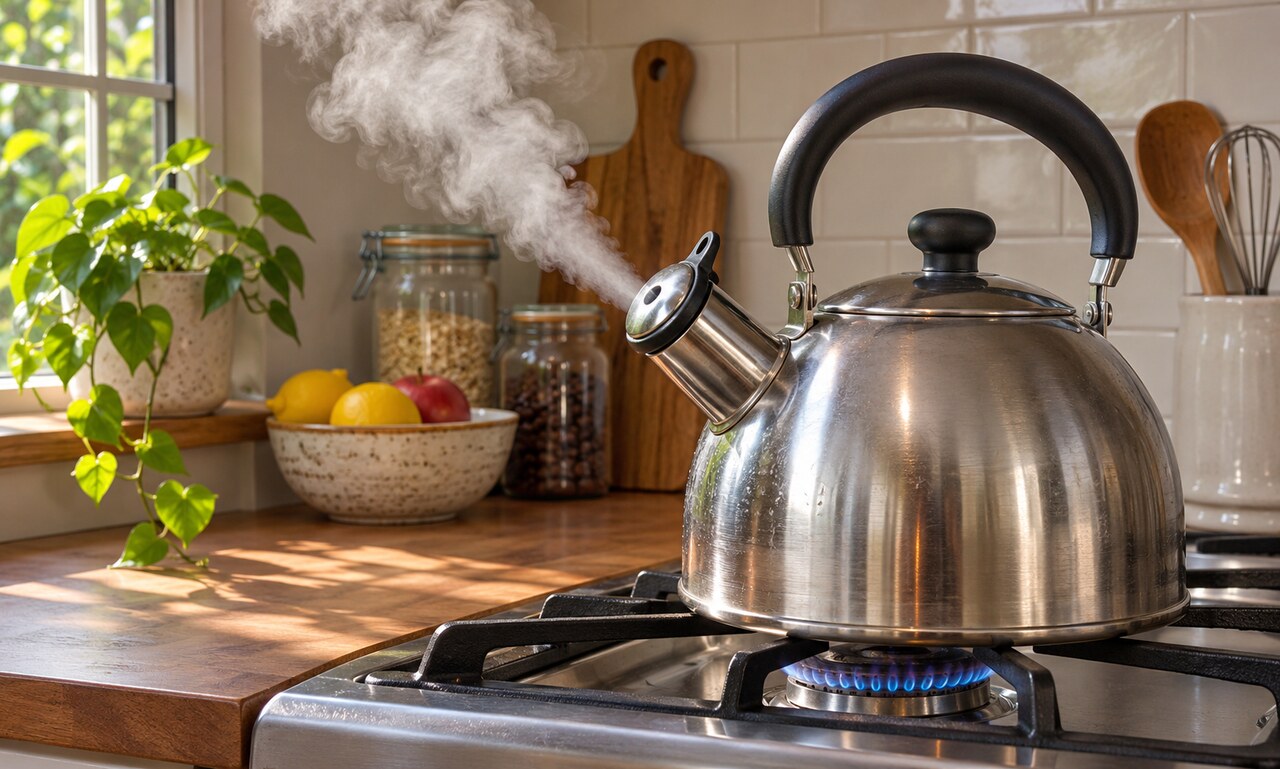
The same property that makes room-temperature metal feel cold can make hot metal especially dangerous. When the object is warmer than the skin, metal transfers heat into the hand rapidly. Wood or fabric may feel less intense at the same measured temperature because energy moves through them more slowly.
This is one reason cookware combines metal bodies with handles made from less conductive materials.
Feeling temperature is really feeling change
Thermal conductivity is only part of the full picture; density and heat capacity also influence how a material exchanges energy with the skin. Together, these properties help explain why stone, tile, plastic and carpet can all feel different in one room.
A simple thermometer test separates sensation from measurement. Leave the metal and wooden objects side by side long enough to settle, then measure each before touching them. Their temperatures will be similar, while the experience remains different. The hand is accurately reporting heat flow, just not the quantity we usually mean by temperature.
READ NEXT