Every shop, apartment building and restaurant depends on goods moving from a vehicle to a door. When a street provides no place for that transfer, the work does not disappear. It moves into a traffic lane, a bike lane, a bus stop or a space meant for pedestrians.
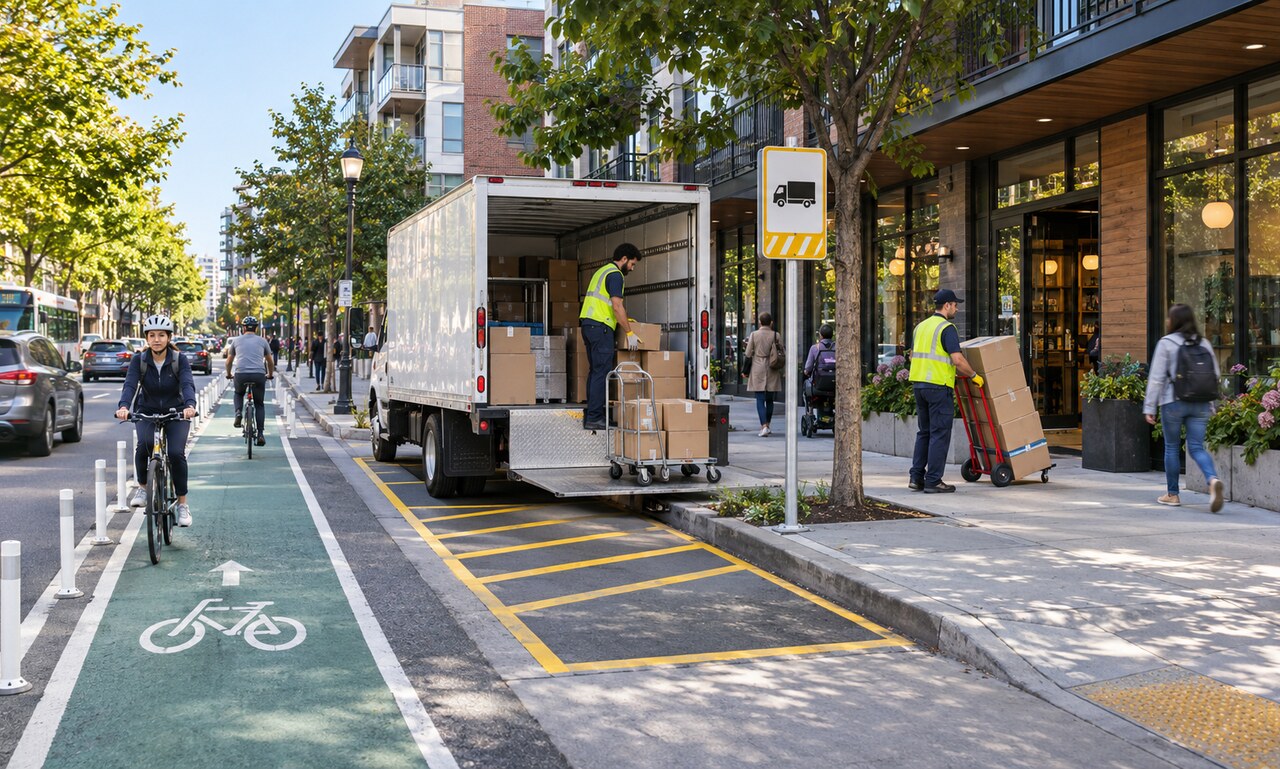
A loading zone is a small piece of curb designed to contain that activity.
Predictability reduces conflict
Drivers searching for a legal place to stop circle the block or make improvised decisions. A clearly marked zone gives them a known destination and helps other street users anticipate where trucks and hand carts will appear.
Placement matters. The path from vehicle to entrance should be short without crossing a protected bike lane blindly or blocking an accessible curb ramp. Enough space at the rear or side of the vehicle allows lifting equipment to operate safely.
The curb changes through the day
Demand is rarely constant. Deliveries may peak in the morning, passenger pickup in the evening and restaurant activity at night. Time-limited loading rules can let one section of curb serve several purposes, provided the signs are clear and enforcement is consistent.
Very short limits encourage turnover, but they must reflect the work. A furniture delivery, grocery shipment and small parcel stop require different amounts of time.
Design must reach beyond the truck
Loading includes the movement between curb and building. Smooth pavement, adequate sidewalk space and doors that accept hand carts all affect whether a delivery blocks other people. Buildings with internal loading bays still need routes that connect those bays to elevators and storage areas.
Cargo bicycles and smaller electric vehicles can reduce space and emissions for some trips. They also need designated places to stop rather than being treated as an afterthought.
Data can improve the allocation
Cities can observe how long zones are occupied, when illegal stopping occurs and which blocks generate the most deliveries. The goal is not to eliminate every moment of competition but to assign scarce curb space where it prevents the greatest disruption.
Loading zones are often noticed only when someone else is using them. Their broader value is what they keep clear: travel lanes, bus stops, bicycle routes and the pedestrian path. A functioning curb makes the movement of goods part of the street instead of an obstacle placed across it.
READ NEXT