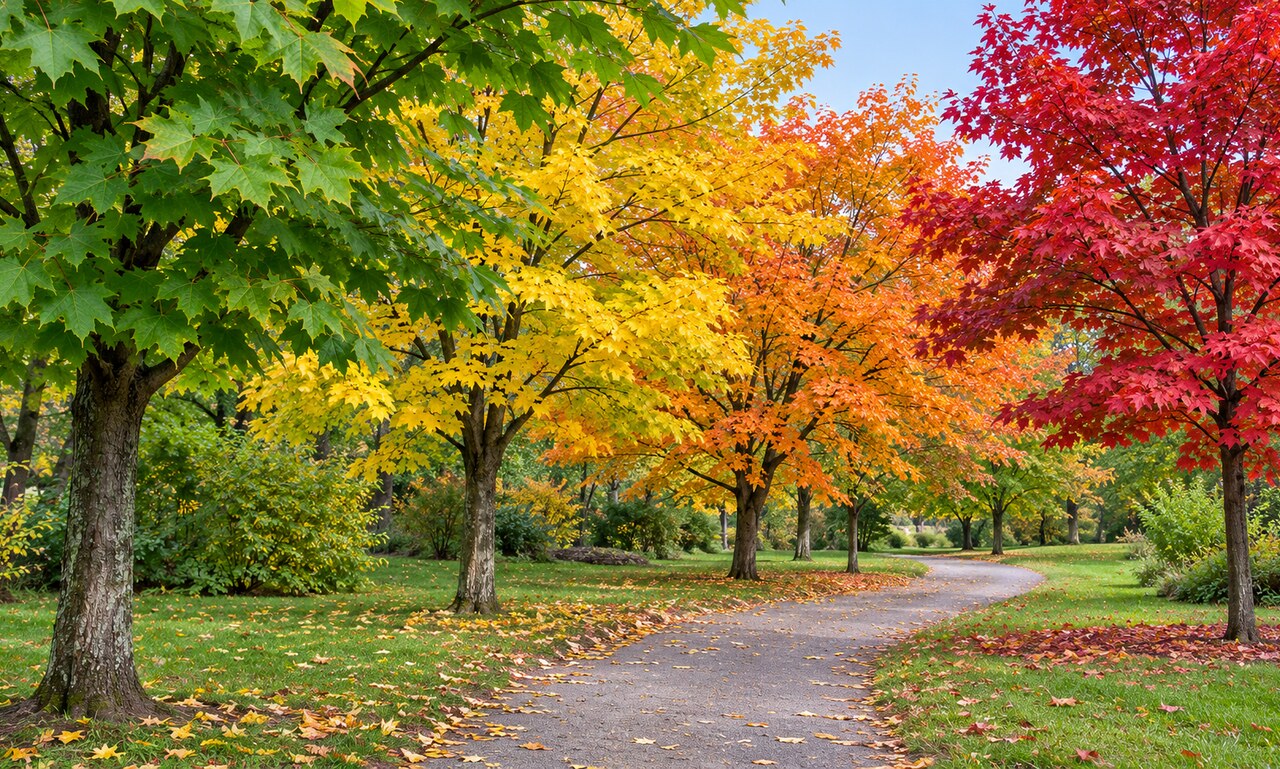
Autumn color can appear to arrive overnight. A green canopy begins to show yellow at its edges, then orange and red spread across a hillside. The transformation looks like new color being painted onto the leaves, but much of the palette was already there.
The change begins as trees prepare for winter.
Green has dominated the view
During the growing season, leaves contain abundant chlorophyll. This pigment absorbs light that powers photosynthesis and reflects green wavelengths, giving most leaves their familiar color. Trees continually make and replace chlorophyll while sunlight and warm conditions support active growth.
Leaves also contain yellow and orange pigments called carotenoids. They help manage light within the leaf, but chlorophyll usually masks their color.
Shorter days shift the tree's priorities
As daylight decreases, many deciduous trees slow chlorophyll production. Existing chlorophyll breaks down, and the greens fade. The yellow and orange carotenoids become visible without needing to be newly created.
At the base of each leaf stem, a separation layer gradually forms. It limits the movement of water and nutrients and will eventually allow the leaf to fall. Before that happens, the tree recovers useful materials from the leaf.
Red follows a different path
Red and purple colors come mainly from anthocyanins. Unlike carotenoids, these pigments are often produced in greater amounts during autumn. Sugars trapped in a leaf, bright light and cool conditions can encourage their formation in some species.
Scientists continue to examine the advantages these pigments may provide. They may help protect leaf tissue from intense light while nutrients are withdrawn, though color also varies with species and local conditions.
Weather changes the display
A sequence of sunny days and cool nights can support vivid color, provided temperatures remain above a damaging freeze. Drought may cause leaves to brown or fall early. Strong wind and heavy rain can shorten the display by removing leaves from branches.
No single date guarantees peak color because trees respond to latitude, elevation, weather and their own biology. Even neighboring trees may turn at different times.
Autumn color is therefore both a chemical process and a record of conditions. The leaves show how a tree closes one growing season, saves what it can and prepares to begin again.
READ NEXT