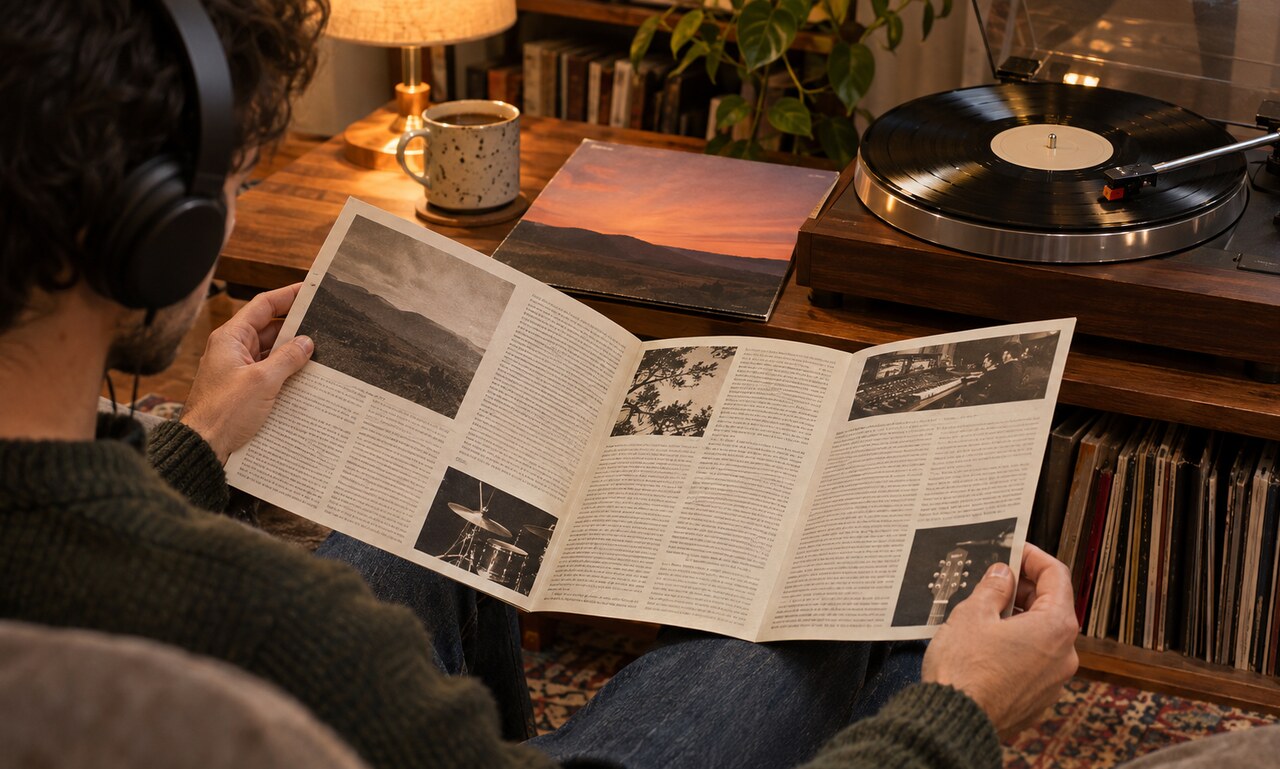
Music reaches listeners without needing a physical object, yet album artwork remains one of the first ways a release announces itself. Before the opening note, an image suggests scale, mood and point of view.
The cover does not explain the music. Its better role is to create a doorway into it.
A visual first impression
Color, typography, photography and illustration shape expectation. A crowded composition can signal intensity. A quiet portrait may create intimacy. An abstract image can leave the listener with a question that the record slowly answers.
This first impression matters even when the artwork appears as a small thumbnail. Strong design survives reduction because its central idea remains legible without relying on tiny details.
The image follows the music
Artwork becomes attached to listening memories. A cover appears in a library, on a poster or beside a shared link, repeatedly calling the same sound back to mind. Over time, the relationship works in both directions: the music changes how the image feels, and the image changes how the record is remembered.
Physical formats change the encounter
A vinyl sleeve gives artwork room to unfold. A booklet can include photographs, credits and lyrics. Digital releases offer animation, alternate images and direct connections to video. Each format creates different possibilities, but none removes the need for a clear visual identity.
The challenge is to design across sizes. An image must hold attention on a large sleeve and remain recognizable on a phone.
Credits belong to the work
Cover art is often treated as packaging, yet it is made through its own creative decisions. Photographers, illustrators, designers and art directors help establish how the music enters public culture. Crediting them preserves that collaboration.
An album can be heard with the screen turned off. Still, when artwork is considered with the same care as sequencing and sound, it gives the release another dimension. The cover is not the music, but it can become the place where the music lives in memory.
READ NEXT