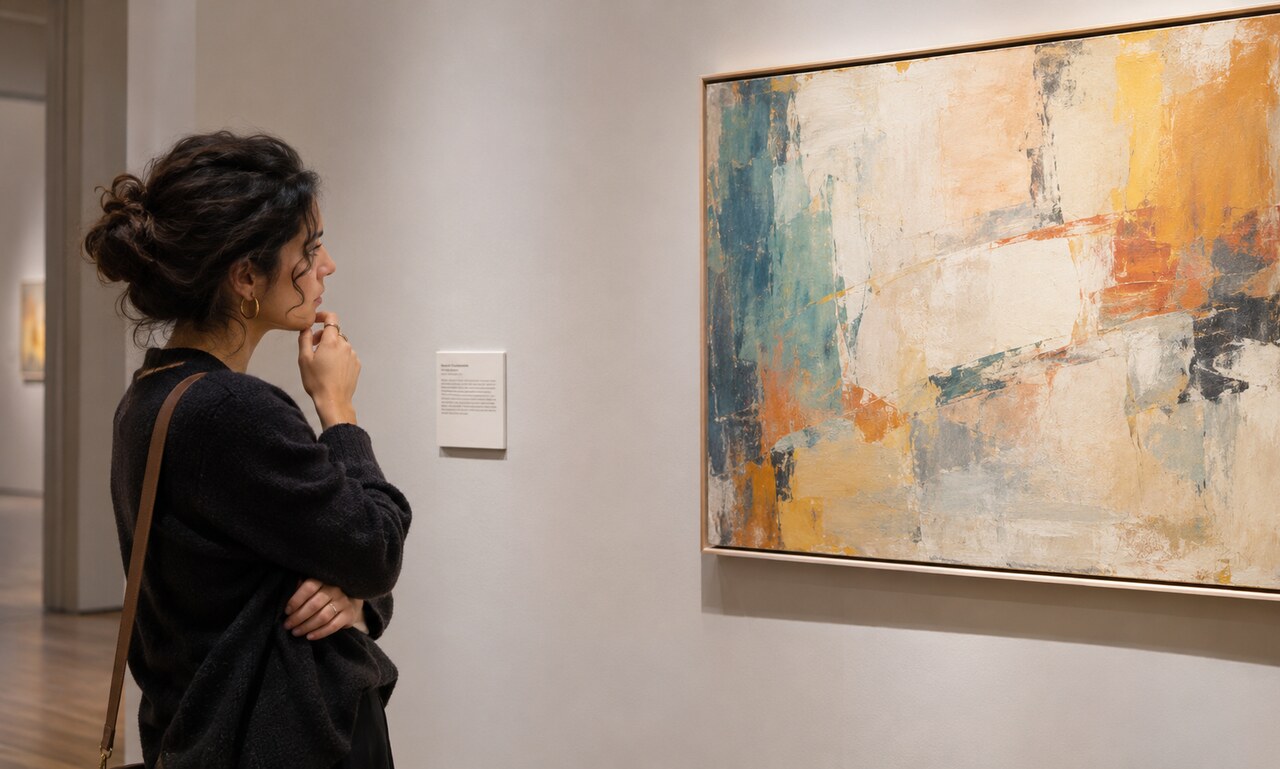
A museum label is physically small, but it can reorganize an entire encounter. Before reading, a visitor may notice color, scale or an unfamiliar face. Afterward, the same object becomes connected to a date, a maker, a place and a set of ideas.
The label does not merely describe what is already visible. It helps decide what becomes visible next.
Basic facts establish a frame
The artist's name, title, date and materials give the work a position in history. Knowing that an image was made during a war, after a migration or with an unusual process changes the questions a viewer asks. Even the title can turn an abstract shape into a landscape, gesture or memory.
These facts are never entirely neutral. A date may be certain or estimated. A maker may be named, attributed or recorded as unknown. The way uncertainty is presented affects how confidently the institution tells the story.
Short text has to choose
Space beside an artwork is limited and visitors often read while standing. Writers must decide which details deserve attention. One label may focus on technique, another on biography, ownership, symbolism or the circumstances of collection.
Every choice brings something forward and leaves something else outside the frame. A clear label can acknowledge that selectivity by offering a useful entry point rather than pretending to provide the final interpretation.
Language shapes authority
Specialized vocabulary can provide precision, but it can also make a visitor feel that the work belongs only to experts. Plain language opens the encounter without reducing complexity. Questions, quotations and multiple voices can create space for observation rather than giving instructions about what to feel.
Translations and accessible formats extend that invitation. Large type, strong contrast, audio and tactile information determine who can use the interpretation in the first place.
Looking can come before reading
Some visitors cover the label with a hand or delay reading it to protect their first response. Others need context before they can begin. There is no single correct order.
The most useful label supports both approaches. It rewards close looking, adds information the object cannot supply by itself and leaves room for disagreement. When a visitor turns back from the words to the artwork, the label has done its best work: not replacing the act of seeing, but making another kind of seeing possible.
READ NEXT