Translating a song is not the same as translating a set of instructions. The new words must make sense, but they may also need to fit a melody, land on a beat and feel natural in a singer's mouth.
That creates a chain of choices. A literal phrase may be too long. A perfect rhyme may point toward the wrong image. A cultural reference that feels immediate in one language may need context in another.
The melody sets physical limits
Every line has a certain number of notes, stresses and held vowels. Languages distribute information differently, so the translator cannot simply swap one word for another. A short English phrase might require many syllables elsewhere, while another language may express the same thought more compactly.
Singers also need vowels they can sustain and consonants they can articulate at speed. A line that reads elegantly on paper may feel awkward once it is sung.
Meaning is more than a dictionary match
A lyric can communicate through tone, ambiguity, sound and repetition. The translator has to decide which qualities matter most in each moment. Preserving an image may be more important than preserving its exact syntax. Keeping a joke may require a different setup. A familiar idiom may need a new local equivalent.
This is why two careful translations of the same song can differ. Each version maps the work's priorities in its own way.
Performance completes the translation
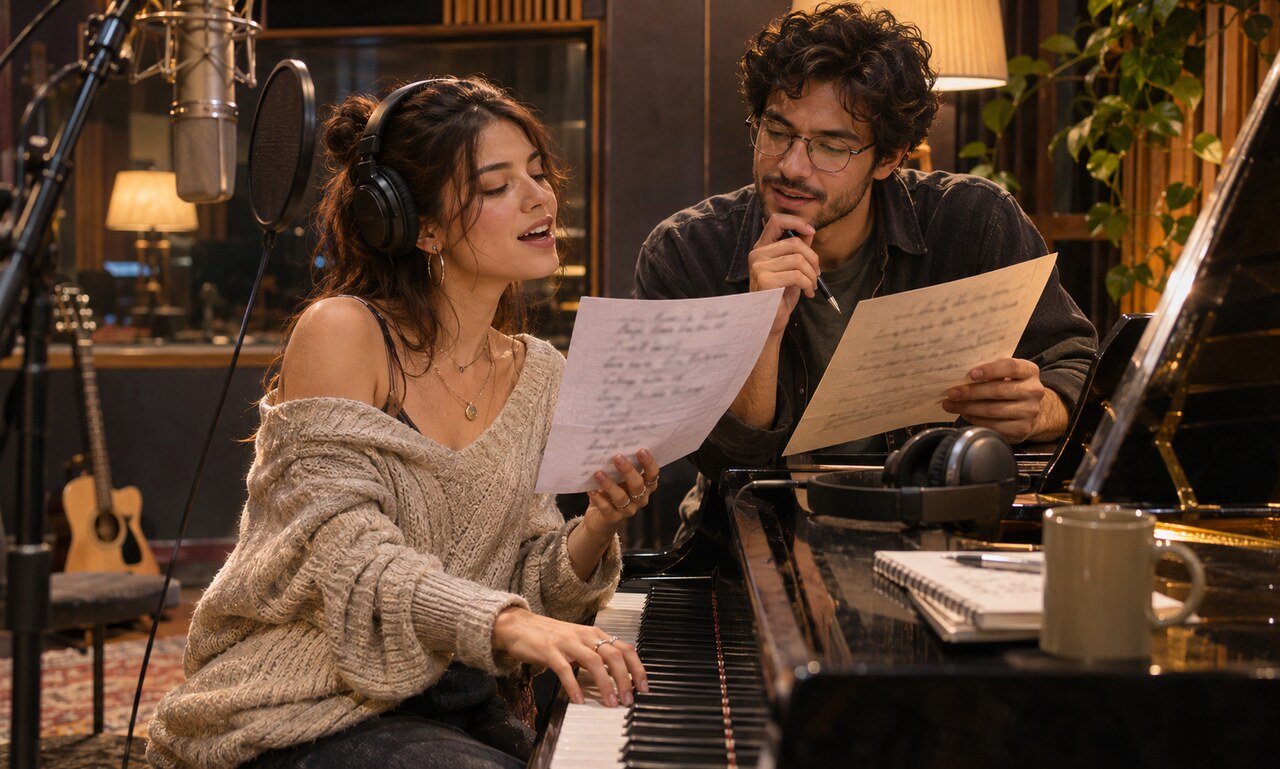
The singer shapes the result through phrasing and emphasis. A translated line may gain clarity when a performer delays a word or changes the weight of a note. Collaboration among translator, vocalist, composer and arranger can reveal problems that no one sees alone.
Credits matter here. Naming the translator recognizes that the new version contains interpretive and creative labor, not just mechanical substitution.
A new version can open another doorway
Translation can let a song travel into communities that might otherwise meet it only at a distance. It can also invite listeners back toward the original language, where different sounds and associations remain.
No translation carries everything. The strongest ones do something more honest: they choose carefully what to carry, make those choices singable and leave room for listeners to notice that another language is present beneath the performance.
READ NEXT