Public stairs often solve a basic geographic problem. They connect a station to a street, cross a steep park or join two levels of a civic building. The distance may be short, yet the design can make it feel easy, tiring or unsafe.
A good staircase supports movement without pretending that stairs work for everyone.
Consistency builds confidence
People learn the rhythm of a staircase after the first few steps. Treads should offer reliable depth, and risers should remain consistent in height. An unexpected variation can interrupt that rhythm and create a trip hazard.
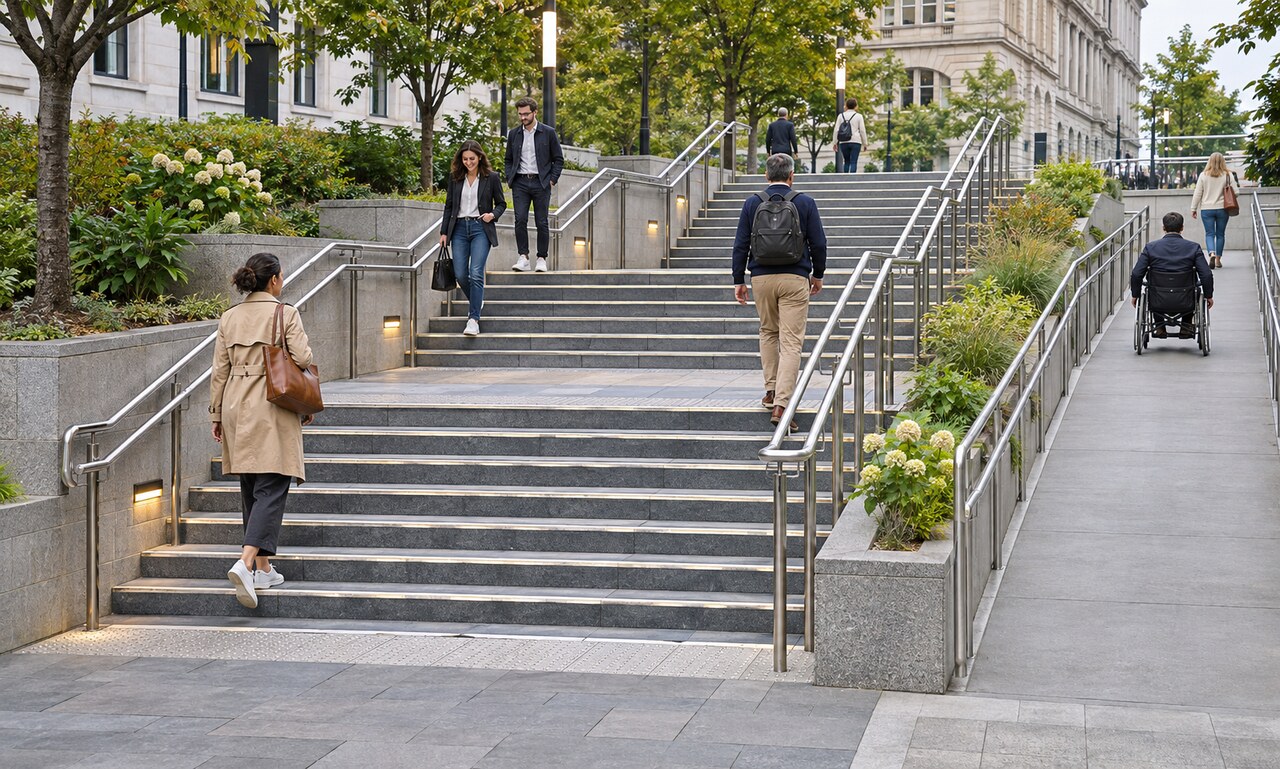
Visible step edges help people judge the next change in level, especially in low light or where materials have similar colors. Surfaces need traction and drainage appropriate to local weather.
Handrails are part of the route
Continuous handrails provide balance while going up and down. They should be easy to grasp, positioned where users can reach them and extend through landings where required. Wide stairs may need a central rail so support is not limited to the edges.
Rails also communicate the direction and extent of the stairway to people with limited vision. Their usefulness depends on remaining clear of signs, decorations and stored objects.
Landings create places to pause
A long uninterrupted flight can be exhausting. Level landings divide the climb and give people space to rest without blocking others. Benches near major stair routes can support older adults, people recovering from injury and anyone carrying a load.
Lighting should reveal treads, faces and changes in direction without producing glare or deep shadows.
Stairs need an equal alternative
A ramp, elevator or gently graded route should connect the same destinations for people who cannot use stairs. It should be easy to find and should not send users on a distant service route. The presence of an accessible path also helps travelers with luggage, parents with strollers and workers moving carts.
Maintenance completes the design. Snow, leaves, standing water and damaged edges can quickly undo careful planning. Repairs and winter clearing need to cover the accessible route as well as the steps.
Public stairs are successful when they feel predictable, legible and connected to a genuine alternative. They should overcome a change in elevation without turning that elevation into a social barrier.
READ NEXT