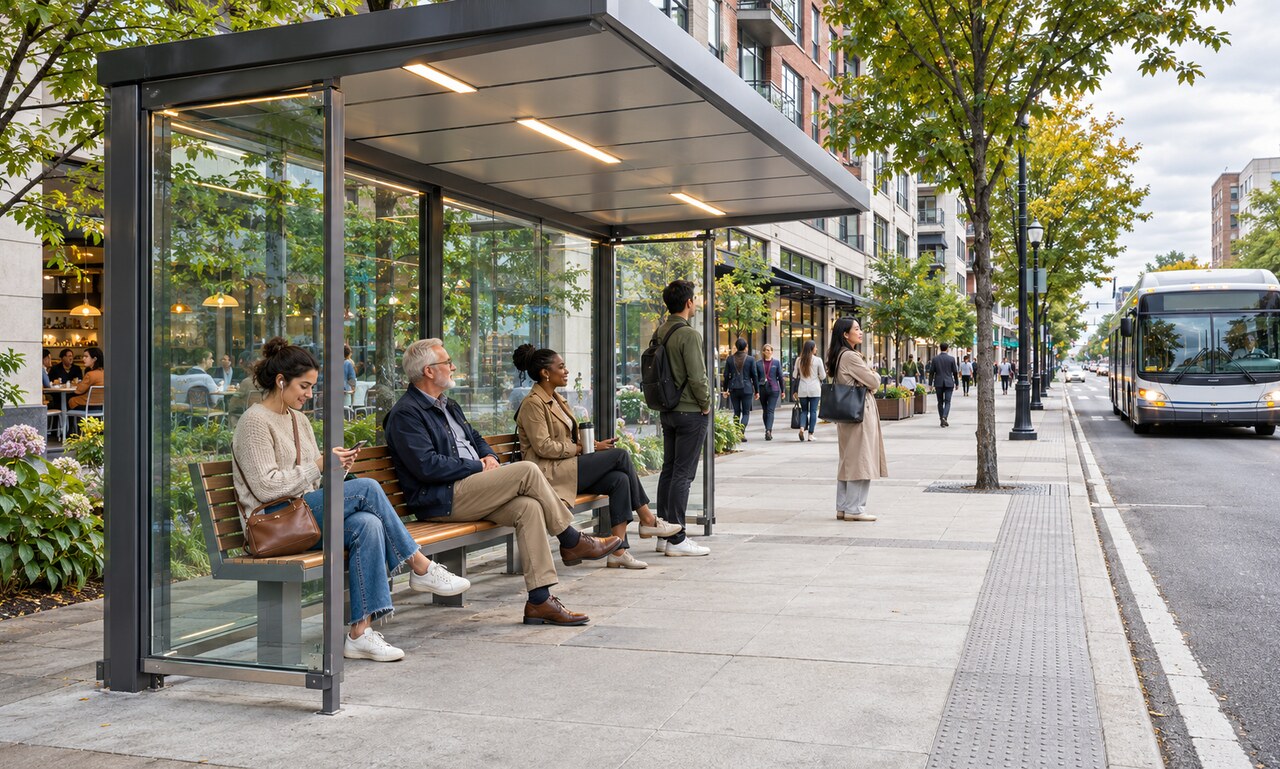
A bus shelter serves a short period of waiting, but that wait can determine whether a transit trip feels practical. Rain, wind, heat and uncertainty become more significant when a bus is delayed or a rider has limited mobility.
The best shelters make waiting safer and more predictable without blocking the sidewalk around them.
Weather protection needs local knowledge
A roof should extend far enough to keep rain and snow from the seating area. Side panels can reduce wind, but their position should reflect the direction of common storms. In hot climates, shade and airflow may matter more than enclosure.
Transparent panels improve sightlines between riders, drivers and the street. They also need markings that make the glass visible to people walking nearby.
Access begins before the shelter
A continuous, firm path should connect the sidewalk, shelter and boarding area. Wheelchair users and people with walkers need enough clear space to wait and approach the bus. A bench should not occupy the only accessible position.
Seating at a comfortable height, with backs and arm supports where possible, helps older riders and anyone who cannot stand for long periods. The curb area must remain clear so a bus ramp can deploy.
Information reduces the burden of waiting
A stop marker should be easy to see from the sidewalk and the approaching bus. Route numbers, maps and service notices need readable type, strong contrast and useful placement. Real-time arrival information can reduce uncertainty when it is accurate and maintained.
Lighting supports visibility after dark, but it should illuminate faces, signs and the boarding zone without creating harsh glare.
Placement shapes the whole sidewalk
A shelter can become an obstacle if it narrows the walking path, hides a crossing or conflicts with a bicycle lane. Designers need to consider the movement around the structure, not only the people inside it. Drainage, snow storage, nearby trees and door openings all influence the final position.
Regular cleaning and quick repair are part of the service. Broken glass, damaged seating or an unreadable sign can make a technically present shelter functionally absent.
A useful bus shelter is modest public architecture. It recognizes that transit includes the time before the vehicle arrives and treats that part of the journey with the same care as the ride itself.
READ NEXT