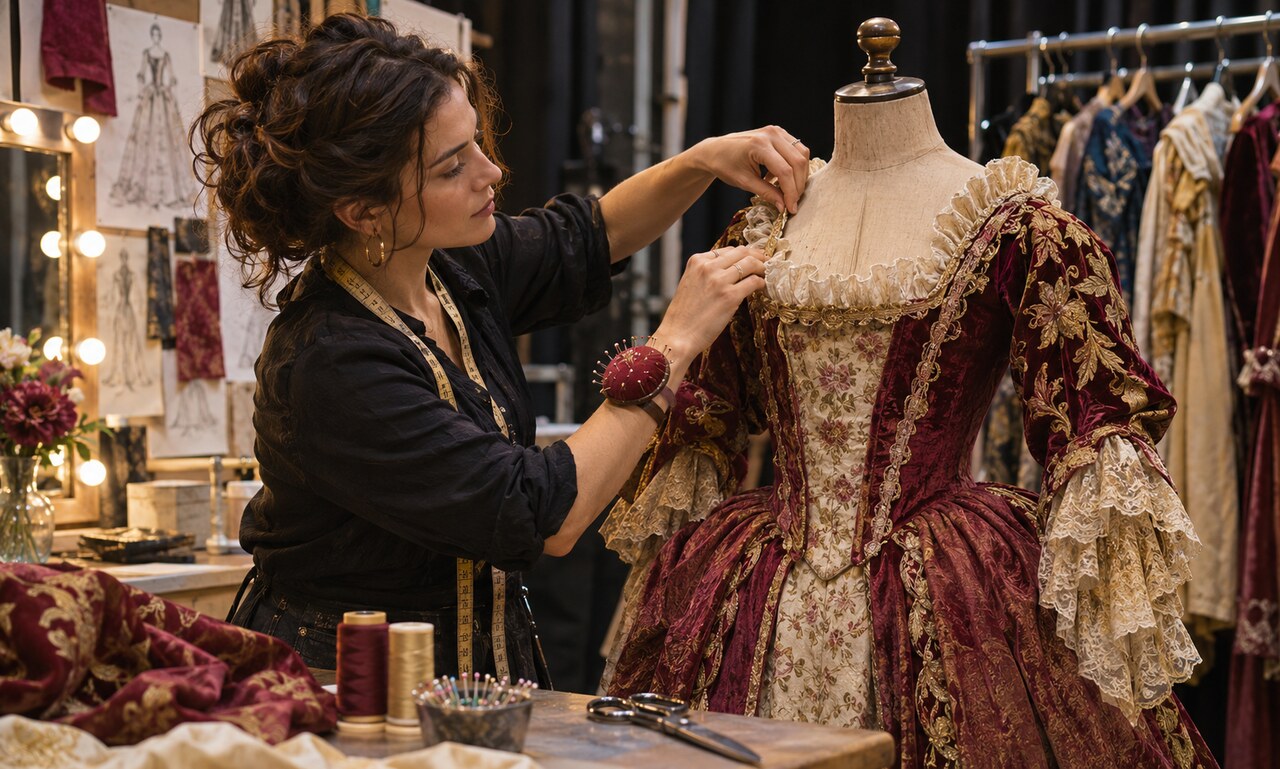
A stage costume is visible before a character explains anything. The cut of a coat, the condition of a shoe or the way a sleeve restricts movement can suggest occupation, status, era and temperament in a single entrance.
Good costume design does not simply decorate the performer. It gives the story a physical language.
Silhouette creates the first impression
From the back of a theater, small details may disappear, but shape remains. A broad shoulder can create authority. A narrow line may make a figure seem guarded or severe. Layers can suggest wealth, protection or the burden of a long journey.
The silhouette also places the body within a period without requiring a perfect museum copy. Designers study historical clothing, then decide which proportions will read clearly in the production's particular space.
Material carries social information
Fabric has weight, sound and memory. Crisp material holds a deliberate shape, while worn cloth collapses around the body. Silk catches stage light differently from wool or cotton. Repairs, fading and stains can reveal how long an object has belonged to the character.
These choices work best when they support the story rather than compete for attention. A costume may look simple from the audience while containing careful construction inside.
Clothing changes performance
An actor moves differently in a fitted jacket, heavy skirt, work boot or formal shoe. Pockets give the hands somewhere to go. A hat changes posture and sightlines. The costume can help the actor discover habits that were not obvious on the page.
Comfort and safety remain part of the design. Performers need to breathe, move and repeat demanding actions through many rehearsals and shows. Quick changes require fastenings and backstage choreography that the audience never sees.
A character's clothes can change with them
Costumes may become cleaner, looser, darker or more restrained as a story develops. A repeated garment can gain meaning through damage or alteration. The wardrobe begins to function like a visual timeline.
This work is collaborative. Designers, cutters, stitchers, dyers, dressers and performers all shape what finally appears under the lights.
Before dialogue provides facts, costume offers evidence. It asks the audience to notice how a person has chosen to appear, what their environment has done to their clothes and how freely they can move through the world of the play.
READ NEXT