From the front, a city block presents its public face: doors, windows, signs and addresses. The alley behind it tells a different story. It shows how goods arrive, where waste leaves and how buildings connect to the systems that support them.
An alley may be narrow and ordinary, but it can reveal more about daily urban function than a polished boulevard.
Service space shapes the main street
Deliveries, utility access and waste collection need space. Moving those activities behind buildings can keep sidewalks and storefronts more comfortable, but only if the alley is wide, maintained and organized enough to perform the work.
A neglected service lane pushes problems back into public space. Overflowing bins, blocked access and poor drainage do not remain hidden simply because they begin behind the block.
Shortcuts create another network
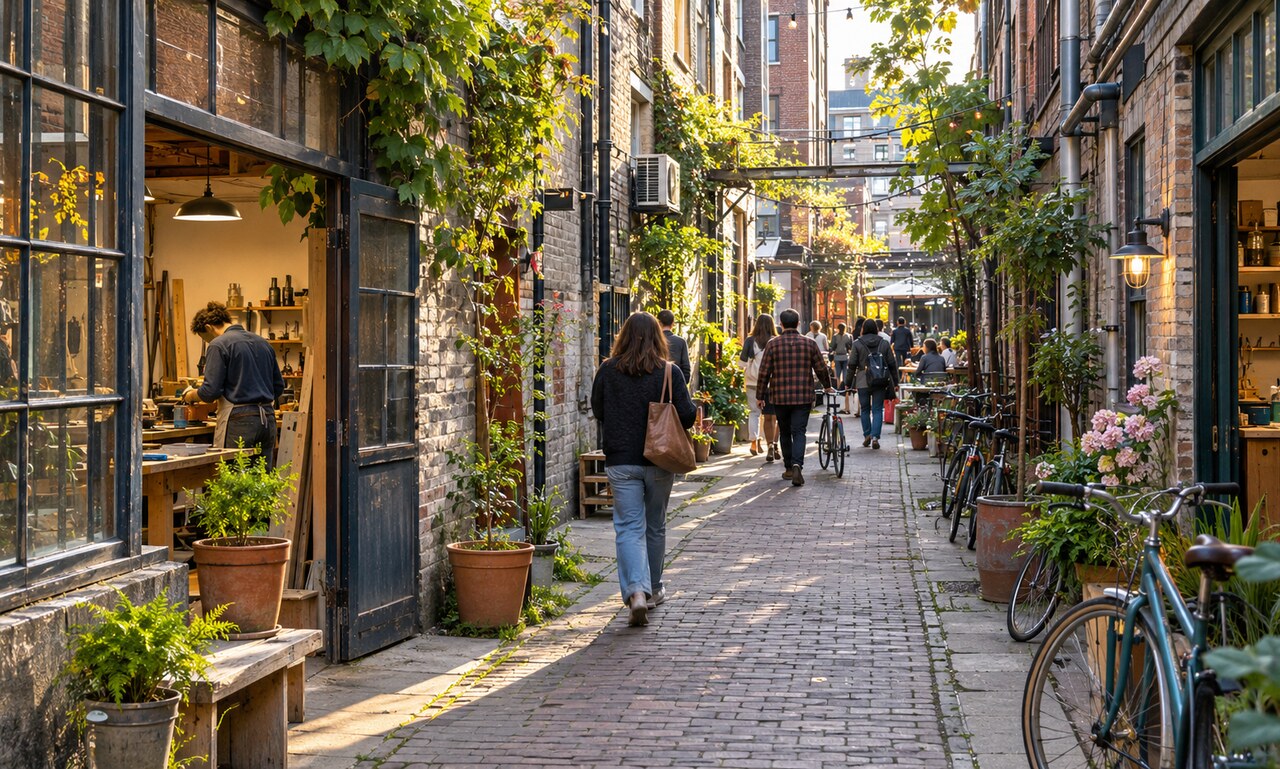
Some alleys provide direct pedestrian and cycling routes through long blocks. A passage that saves only a few minutes can become part of a daily journey to school, transit or a nearby shop.
For that role to work, the route needs clear sightlines, useful lighting and entrances that signal public access. An alley that feels ambiguous may remain empty even when it is technically open.
Small spaces support small uses
Garages can become workshops. Rear buildings can hold studios, local services or additional homes where rules and infrastructure permit. Because alley frontage is less prominent, it may support uses that cannot afford a main commercial street.
This flexibility should not erase the practical functions already there. A successful improvement makes room for people without preventing deliveries, emergency access or waste collection.
Design should begin with observation
Before adding murals, planters or seating, watch how the alley works through a full day. Which doors open? Where do vehicles turn? Does water collect after rain? Who already uses the route?
Beautification can help, but the strongest changes solve a real problem: better drainage, safer pavement, clearer lighting or a reliable path through the block.
The back of the city still matters
Alleys are often judged by whether they can be transformed into destinations. Some should remain quiet service spaces. Others can become useful passages or mixed environments where work and public life coexist.
The important point is that they are not leftover land. They are part of the city’s operating system. Looking closely at an alley reveals how the visible street is supported from behind.
READ NEXT