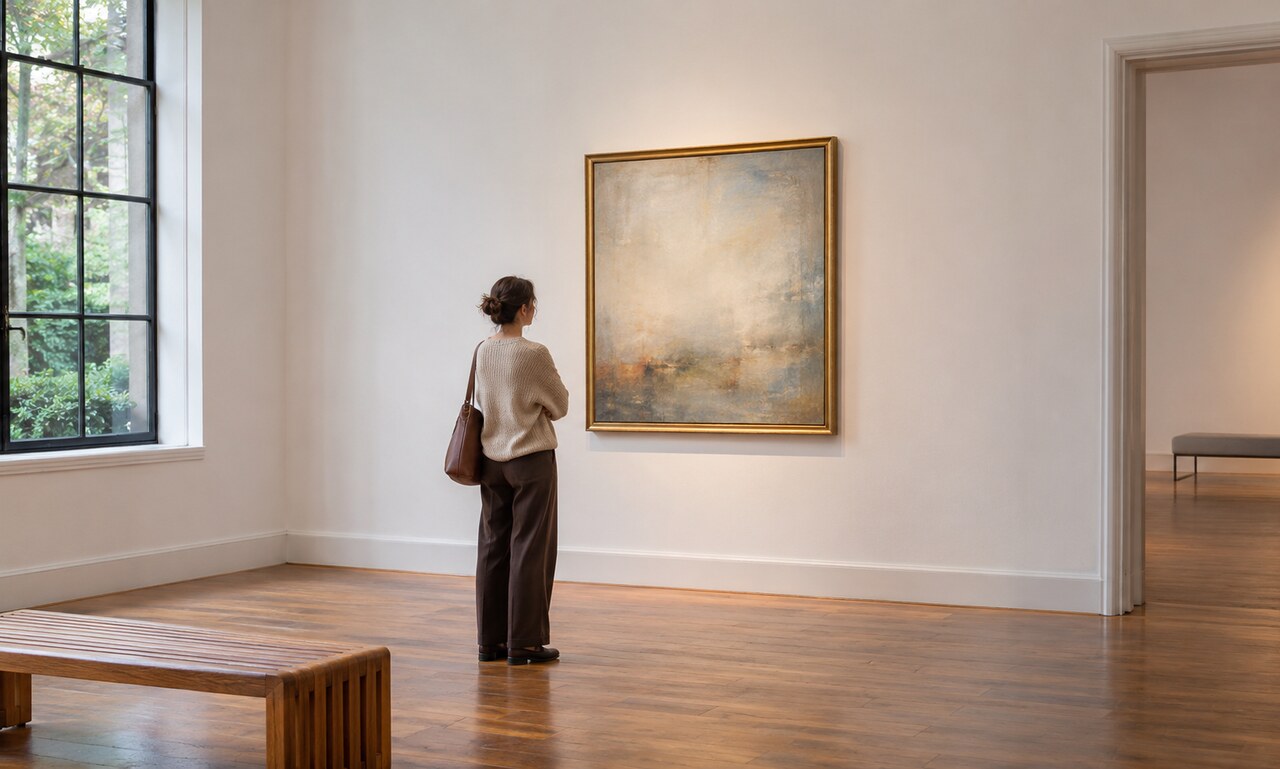
A small museum rarely overwhelms the visitor with scale. There may be only a few rooms, a narrow staircase and a collection that can be seen in an afternoon. Yet those limits can create a form of attention that is harder to find in a building designed to hold everything.
Without the pressure to cover miles of galleries, a visitor can stop. One object has time to become a question rather than another item passed on the way to something famous.
Scale changes the way we look
Large institutions can place works in sweeping historical sequences. That breadth is valuable, but it can also turn a visit into a race against closing time. A smaller collection offers a different rhythm. Repetition becomes visible. Relationships between a few objects begin to matter.
A room devoted to one local craft, one photographer or one period of neighborhood history can be more memorable than a building full of loosely connected highlights. The visitor is not asked to understand an entire civilization in an hour. The invitation is narrower and often more humane.
Local stories gain a physical address
Small museums frequently preserve material that would struggle for space elsewhere: letters from a factory, photographs of a vanished street, tools from a regional trade or work by artists whose importance is closely tied to a particular community.
These objects become more than illustrations when they remain near the place that produced them. A map can be compared with the streets outside. A family name on a label may still be recognized. The museum gives local memory a public room instead of leaving it scattered across private collections.
Conversation is part of the collection
In a small institution, the person at the desk may also have helped install the exhibition. A volunteer may know why an object was donated or which detail visitors usually miss. That closeness can make the experience feel less like receiving a finished lesson and more like entering an ongoing conversation.
The intimacy is not automatically a strength. Small museums can have limited hours, uneven funding and displays that need renewal. They may depend heavily on volunteers and struggle to make collections accessible online or to visitors with different needs.
Leave room for a second look
The best way to visit may be to resist the urge to see everything. Choose one room. Read fewer labels. Return to the object that first caught your attention and notice whether it looks different after learning the surrounding story.
A museum does not need monumental architecture to produce a lasting encounter. Sometimes its power comes from the opposite condition: a small number of things, carefully held, with enough quiet around them for us to look again.
READ NEXT