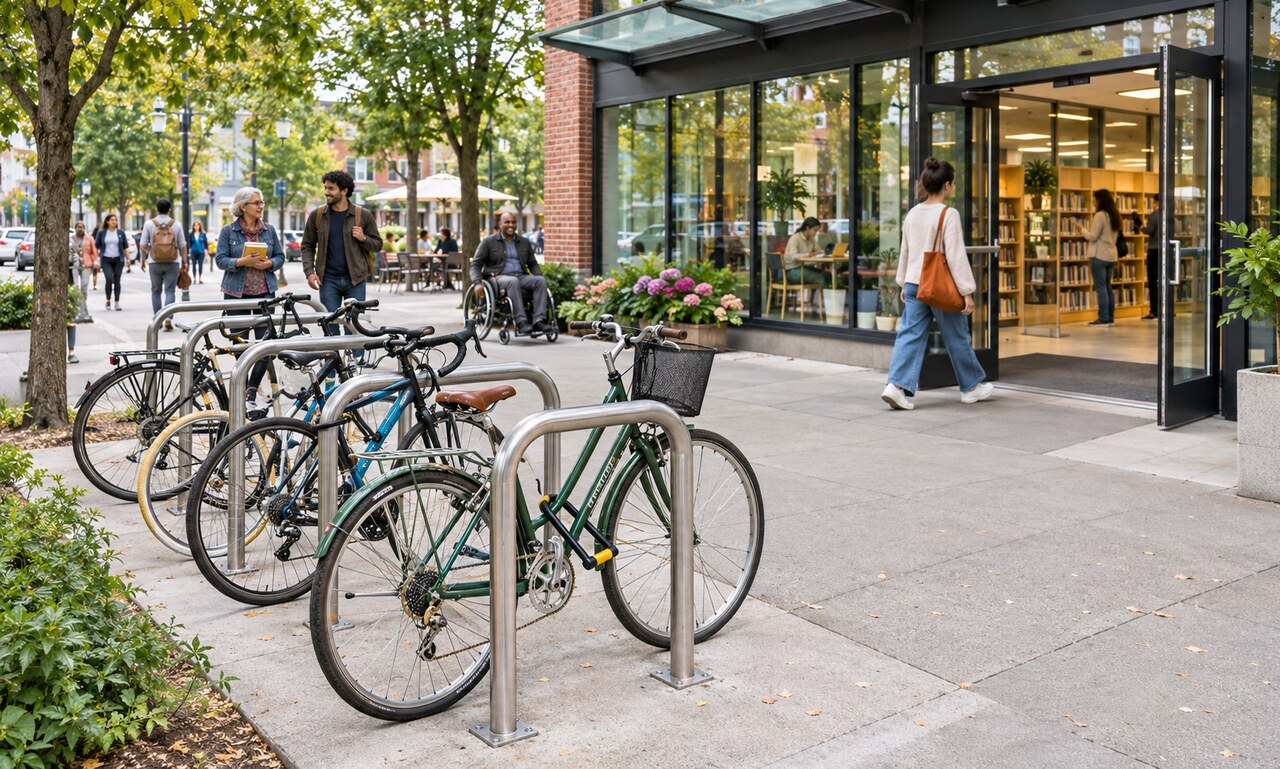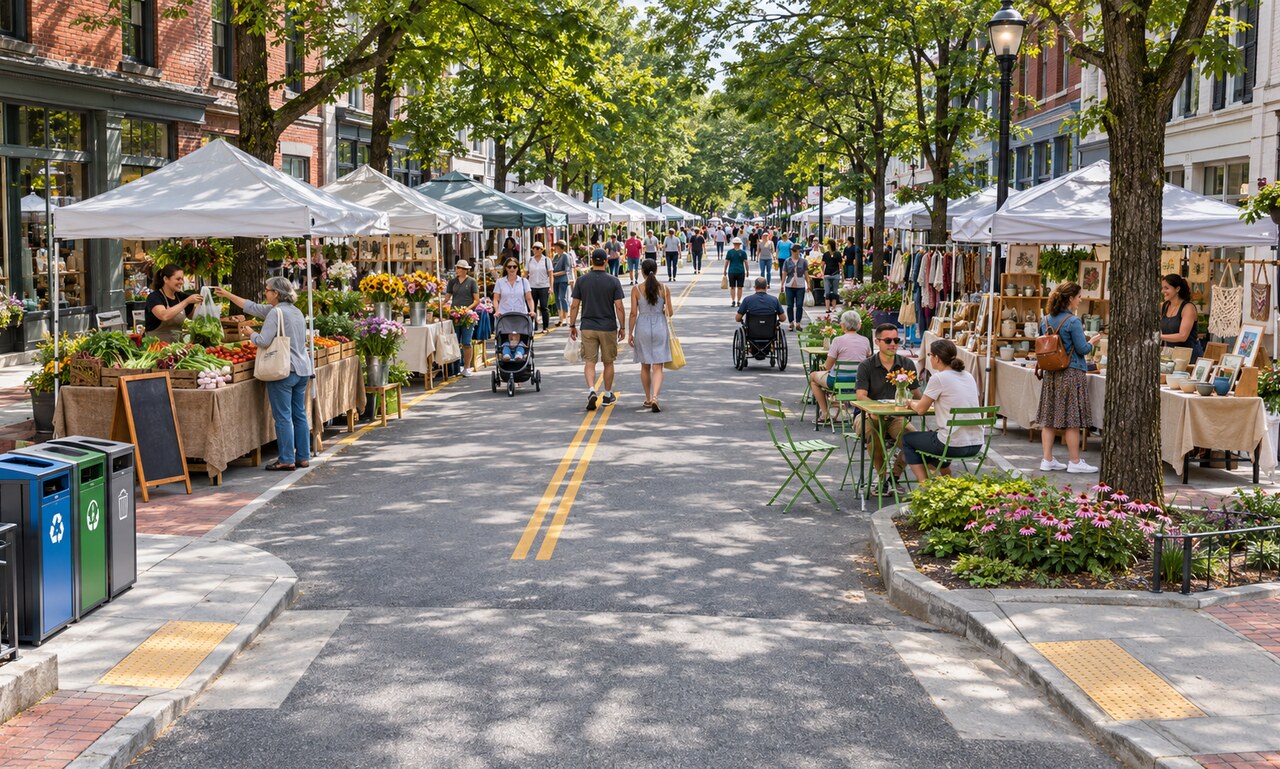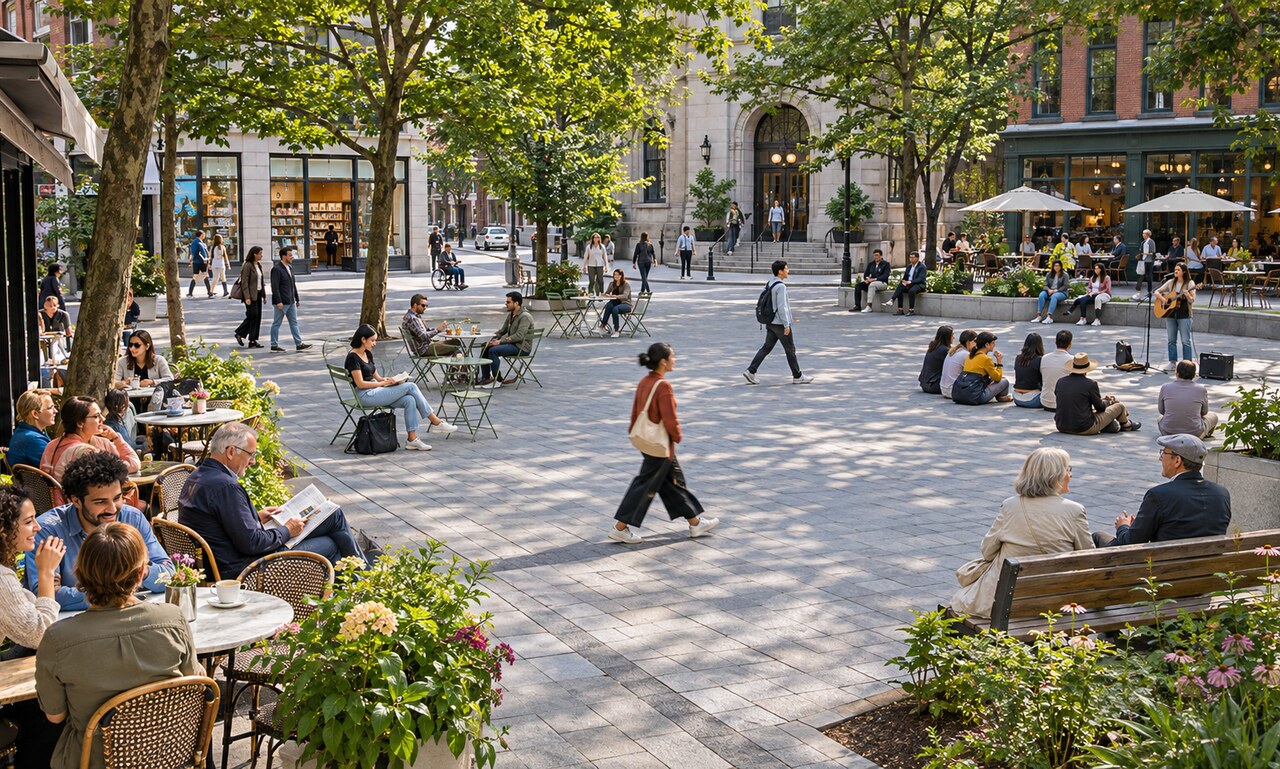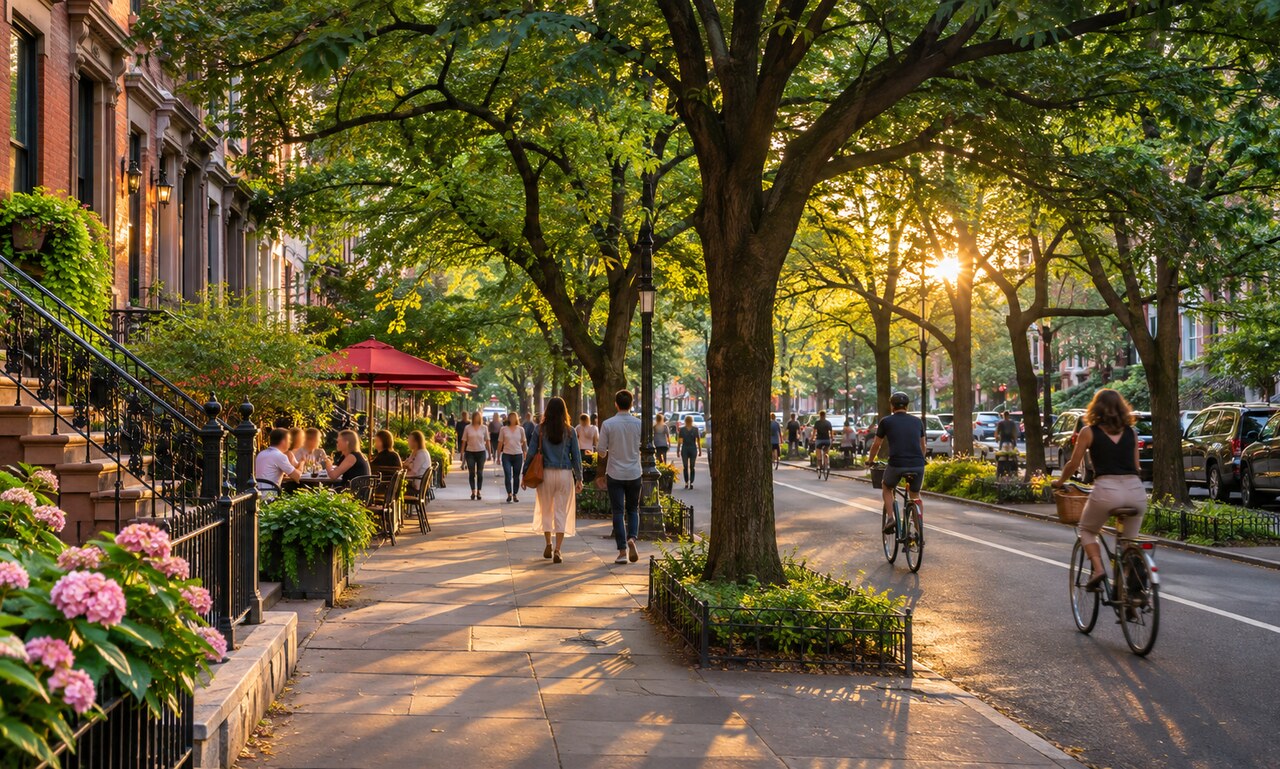
From above, a tree canopy looks like a layer of green spread across blocks and roads. At street level, it is experienced in fragments: the cool patch beside a bus stop, the branches over a sidewalk and the brief relief between a front door and a corner store.
That difference in viewpoint matters. A city can report a healthy overall percentage of tree cover while individual neighborhoods, routes and public spaces remain exposed. The practical question is not only how many trees exist, but where their benefits reach people.
Shade changes the usable city
On a hot day, direct sun can make an otherwise short walk feel demanding. Trees intercept sunlight before it reaches pavement and building surfaces, while leaves release moisture into the surrounding air. Together, these effects can make a shaded route feel meaningfully different from a nearby exposed one.
Comfort affects behavior. A parent may choose the shaded side of a street with a stroller. An older adult may pause beneath a tree before continuing. A bus stop that offers protection from afternoon sun becomes easier to use. The tree is not merely decorating the route; it is helping determine whether the route works.
Continuity matters as much as quantity
One mature tree can transform a corner, but a connected canopy supports an entire journey. Gaps appear at the places where people may need shade most: wide intersections, large parking edges, school entrances and transit stops.
This is why maps should be paired with observation. Walk the route at the time it receives its strongest sun. Notice where people wait, which side of the street they choose and where the shade ends. A plan viewed only from above can miss the experience of moving through it.
Trees are living infrastructure
Urban trees need soil, water, room for roots and long-term care. Planting is the visible beginning, not the completed project. A young tree may take years to provide substantial shade, while a damaged mature tree can remove decades of accumulated benefit in a single season.
Species selection also matters. The right tree must suit the local climate, available space and surrounding utilities. Diversity helps reduce the risk that one pest or disease will erase a large share of the canopy at once.
Ask who receives the benefit
Tree cover often varies sharply from one neighborhood to another. A useful canopy strategy therefore looks beyond citywide averages and considers heat exposure, pedestrian activity and the ability of residents to care for trees on private property.
The strongest measure of success may be ordinary: a child can walk to school with more shade, a person can wait for a bus more comfortably and a street invites people to linger rather than hurry through. Seen this way, a canopy is not a distant environmental idea. It is part of the city at walking pace.
READ NEXT