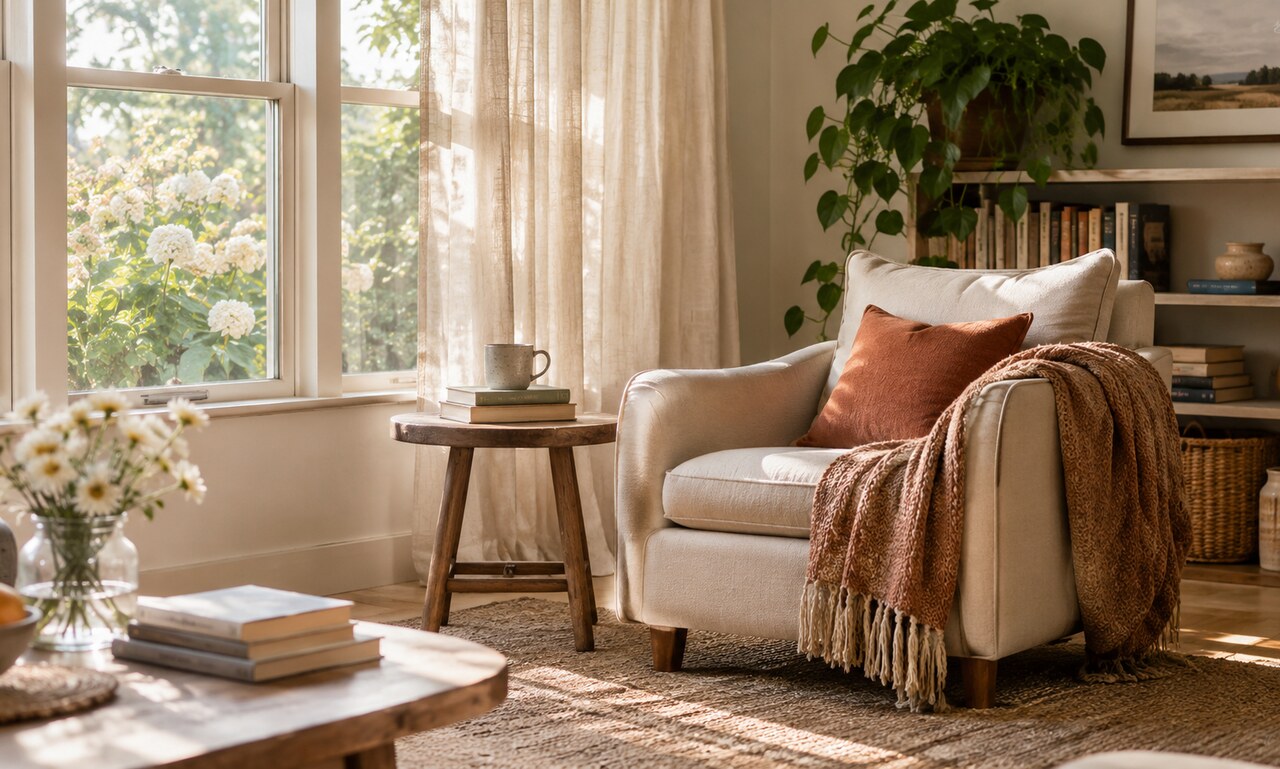
A calm room is not necessarily empty, beige or perfectly organized. It is a space that makes its purpose easy to understand. The chair is available for sitting. The table can be used without first clearing a pile. Light reaches the place where it is needed.
That feeling can be created through small decisions. The goal is not to copy a showroom, but to remove the visual and practical interruptions that make an ordinary room feel harder to use.
Begin with the activity
Decide what the room needs to support. A living room may need space for conversation, television, reading and children’s play. These uses can coexist, but each benefits from a clear home.
Arrange the largest furniture around the main activity before worrying about decoration. A reading chair needs light and a place for a book. A conversation area works better when seats face one another instead of lining every wall. Let function establish the first layer of order.
Reduce decisions at the point of use
Clutter often forms where an object is used but has nowhere convenient to go afterward. A basket beside the sofa, a tray near the entrance or a hook at shoulder height can solve more than a complicated storage system in another room.
Observe where items already gather. That pile is information. Instead of repeatedly moving it away, ask whether the room needs a container, a shelf or a new habit at that exact location.
Use light in layers
One bright ceiling fixture can make a room visible without making it comfortable. Add light where activities happen: a lamp beside a chair, a softer source near the television or a warm pool of light over a table.
During the day, keep window areas as open as privacy allows. At night, several lower lights usually create a gentler atmosphere than one strong source overhead. The best arrangement is adjustable because a room has different jobs across the day.
Let some surfaces remain quiet
Not every wall, shelf and tabletop needs to display something. An open area gives the eye a place to rest and makes the objects that remain easier to notice. This does not mean removing personal photographs or collections. It means editing their surroundings so they can be seen.
Group related objects rather than spreading them evenly across every surface. A small cluster reads as intentional; many isolated objects can make the room feel visually busy.
Choose comfort over performance
A room will not remain calm if maintaining it requires constant effort. Use washable fabrics where spills are likely. Keep frequently used items within easy reach. Leave enough open floor space for people to move without navigating an obstacle course.
The most restful room is not the one that looks untouched. It is the one that can absorb daily life and return to order without a major reset. Calm comes from a space cooperating with the people who live there.
READ NEXT