Music has never been easier to reach. A song can follow us from the kitchen to the car, fill the silence between appointments and continue through a pair of headphones while we answer messages. That abundance is useful, but it can also make listening feel almost invisible.
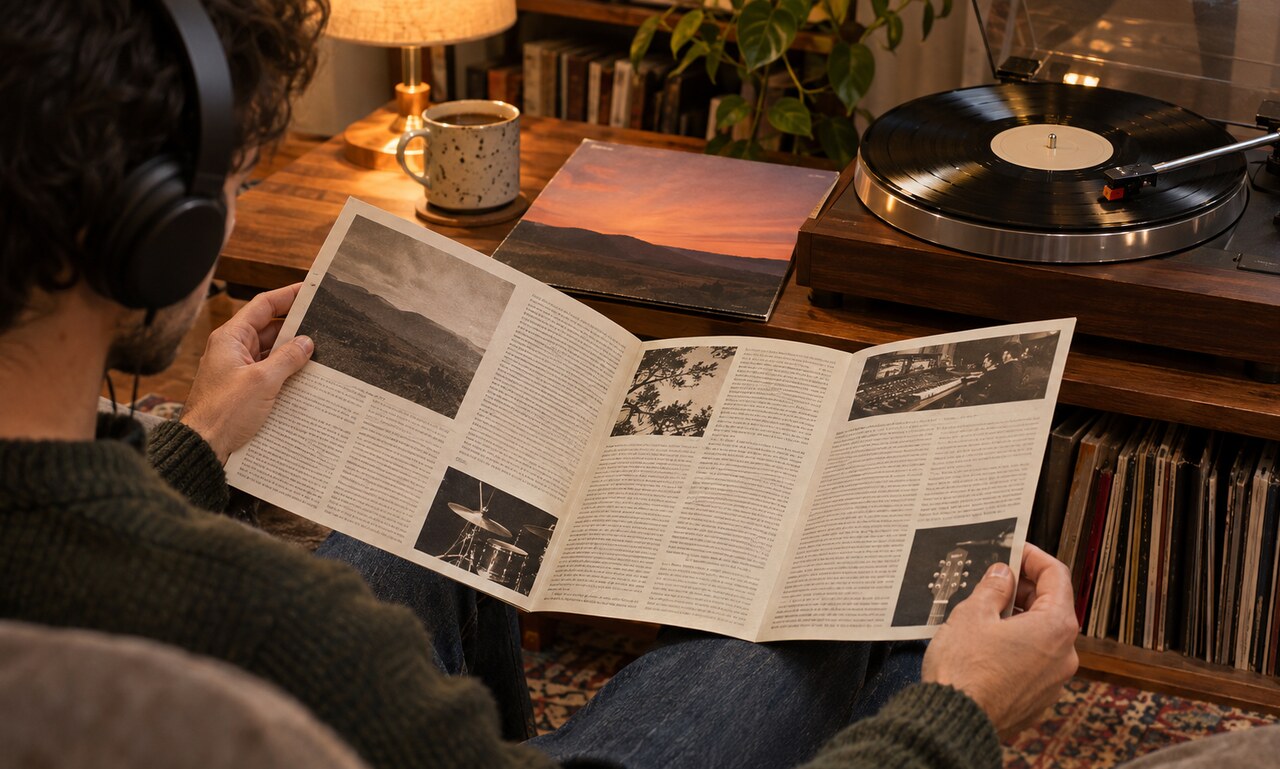
A ritual changes the terms. It might be as simple as choosing one album, putting the phone in another room and sitting down before the opening track. The format matters less than the decision to give the music a beginning, a middle and an end.
Attention gives music a setting
When sound becomes a constant layer beneath other tasks, we often remember the mood without remembering the details. Focus reveals smaller choices: the breath before a vocal enters, the texture of a drum, the way one track prepares the next. These are not hidden facts. They are qualities that become easier to notice when nothing else is asking to be foregrounded.
Physical formats can help because they place gentle limits around the experience. A record has sides. A cassette asks to be turned over. Even a carefully made digital queue can create the same boundary if we resist the urge to keep adding to it.
Ritual is not nostalgia
It is tempting to describe focused listening as a return to a better past. That misses the point. Older formats came with inconvenience, limited access and their own distractions. The value of a ritual is not that it recreates another era. It is that it gives us a way to choose how we listen now.
A streaming service can support deep attention just as easily as a turntable can become decoration. The meaningful difference is behavior. Do we select an album because we want to hear it, or do we accept the next sound because silence briefly appeared?
Make the occasion small enough to repeat
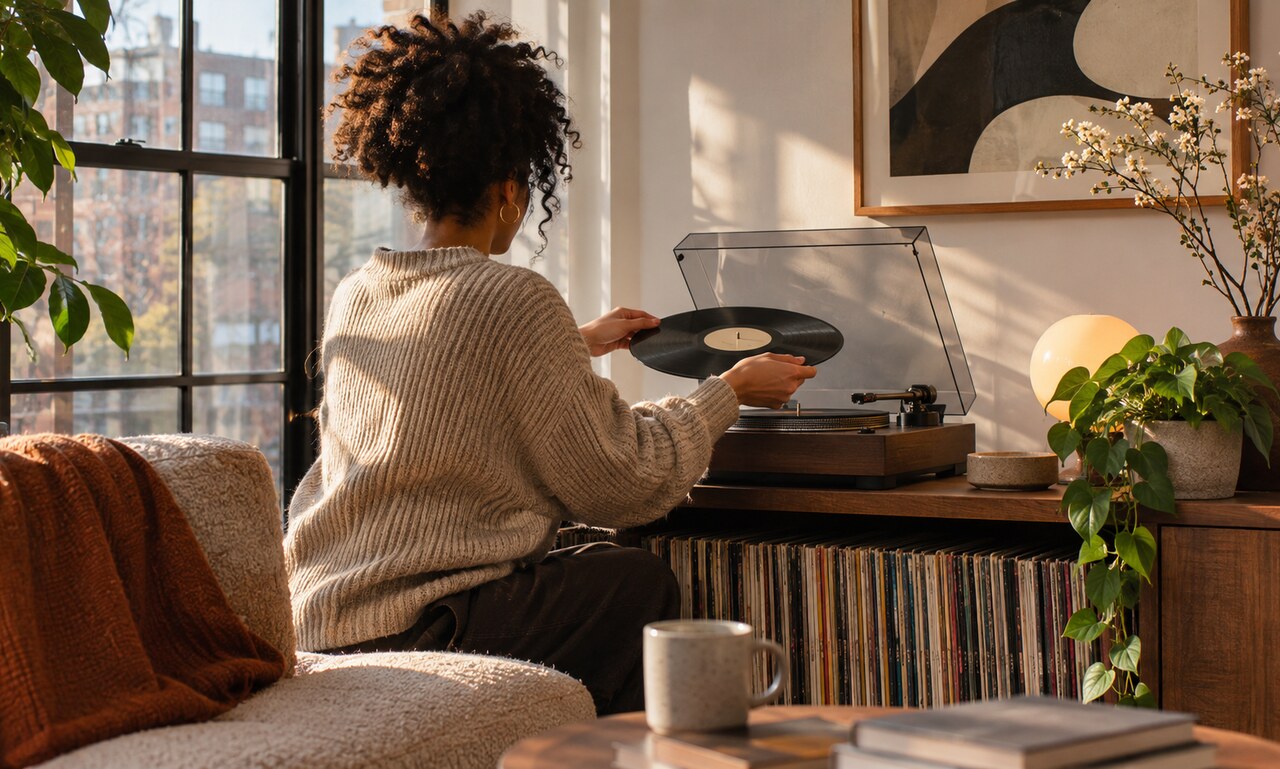
A useful listening ritual should not require perfect speakers, expensive equipment or an empty evening. Those conditions can become excuses. One album after dinner, twenty minutes with a new release or a Sunday-morning side of a favorite record is enough.
Repetition gives the practice character. The chair, the time of day and the act of choosing become part of the memory. Music begins to attach itself to ordinary rooms instead of passing through them without leaving a trace.
The reward is not productivity or self-improvement. It is a fuller encounter with something already available to us. In an age of endless choice, the most generous thing we can offer a piece of music may be a temporary limit: for the next forty minutes, this is what we are here to hear.
READ NEXT