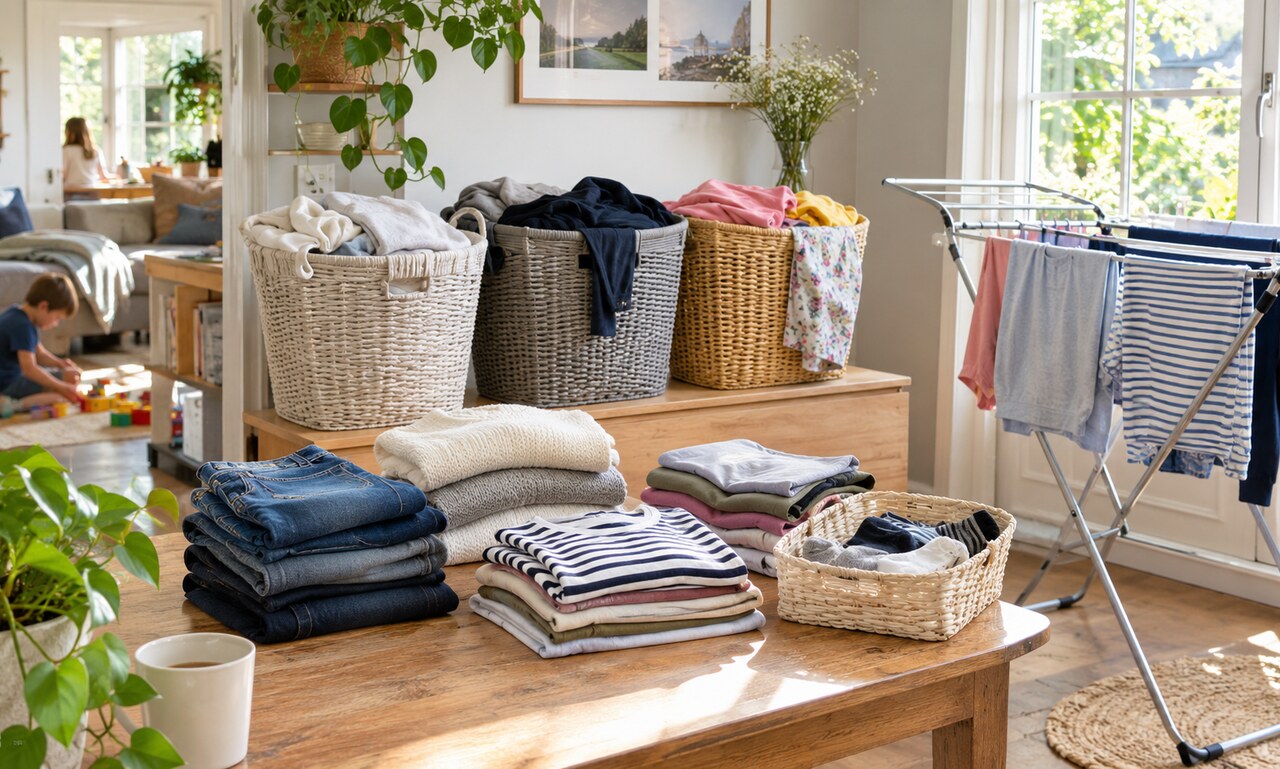
Laundry becomes difficult less because of any single step than because several unfinished steps collect at once. A basket waits to be washed, clean clothes remain in the dryer and folded items settle on a chair. Each pause creates another place to restart.
A steadier routine makes the whole cycle smaller.
Sort by what needs attention
Instead of creating many complicated categories, begin with the divisions that matter in your home. Everyday clothing, towels and bedding may be enough. Separate delicate fabrics, strongly colored new garments or anything with specific care instructions when required.
Check labels before choosing water temperature or a drying method. A simple routine should still protect the material.
Use a reliable cue
Attach laundry to a moment that already happens: a particular morning, the end of a workday or the hour before dinner. The cue matters more than a perfect calendar. It reduces the need to notice an overflowing basket and then find motivation.
If the household produces laundry quickly, two or three modest loads across the week are often easier to complete than one long laundry day.
Choose a load you can finish
A full machine may be efficient, but an overfilled one can wash poorly and create a large folding job. Leave enough room for clothes to move according to the appliance guidance, and start only what can reasonably be dried and put away the same day.
Think of washing, drying, folding and returning items to storage as one task. The machine cycles are pauses within that task, not the finish line.
Remove friction at the last step
Keep hangers near the drying area and place empty baskets where clean clothes will emerge. Fold simple items immediately, then carry each person's clothing directly to its destination. If a category is consistently hard to put away, its drawer or shelf may be too crowded.
A basket limit can help: when the designated basket is full, a load begins. That physical boundary keeps the backlog visible and prevents clothing from spreading across rooms.
The aim is not to spend more time managing laundry. It is to make each round small enough that no stage becomes a separate project. A completed modest load creates more relief than a large load waiting in three different places.
READ NEXT