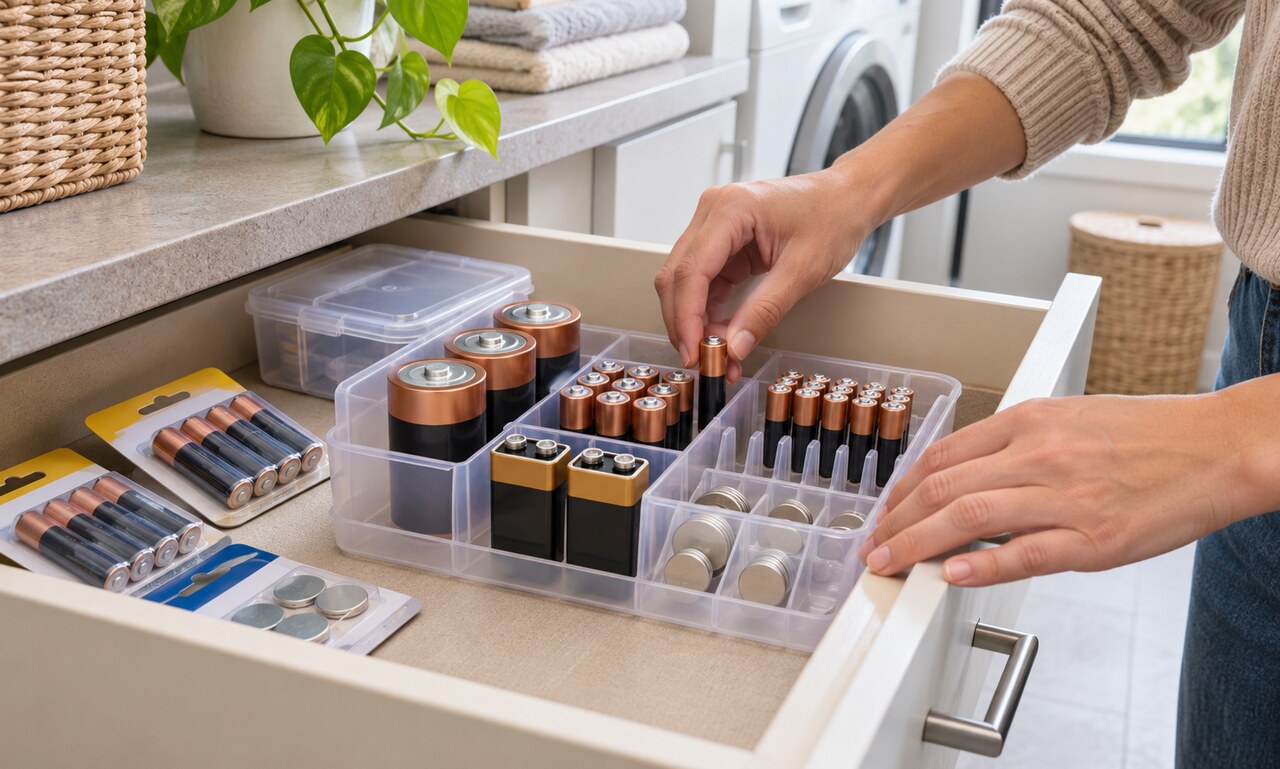
Household batteries often collect in a drawer beside keys, tools and spare parts. That convenient mix can create problems. Metal objects may bridge battery terminals, packaging gets lost and old cells become difficult to separate from new ones.
A small, dedicated storage system makes batteries safer and easier to use.
Protect the terminals
Keep unused batteries in their original packaging until needed, or place them in a purpose-made organizer that holds each cell separately. Loose batteries should not share a container with coins, paper clips, screws or keys. Conductive objects can connect the terminals and cause a battery to discharge, heat or leak.
Nine-volt batteries need special attention because both terminals sit close together on the same end. Cover exposed terminals with nonconductive tape when the battery is stored loose or prepared for disposal, following local guidance.
Choose a stable location
Store batteries at normal room temperature in a dry place away from direct sunlight, heaters and moisture. A high shelf or secured cabinet keeps them away from young children and pets. Coin and button cells are especially dangerous if swallowed and should remain in child-resistant packaging.
Refrigeration is generally unnecessary for modern household batteries. Condensation after removal can introduce moisture, and the small potential storage benefit does not justify the complication.
Keep types and conditions separate
Group batteries by size and chemistry so the correct type is easy to find. Keep rechargeable cells with their intended charger. Do not mix new and partly used batteries in one device, because uneven charge levels can cause poor performance and leakage.
Mark a small section for batteries removed from devices but not fully depleted. Test them before reuse and never return a damaged cell to storage.
Inspect and dispose responsibly
Check the organizer occasionally for swelling, rust, crusty deposits, discoloration or unusual odor. Avoid touching leakage with bare hands, ventilate the area and follow the manufacturer's cleanup directions. Damaged lithium batteries need particular care and should not be placed in ordinary household trash.
Local recycling rules differ by battery chemistry and municipality. A dedicated container for spent cells, with terminals protected where required, keeps them separate until they can reach an approved collection point. Safe storage is mostly careful separation: terminals from metal, old from new and batteries from heat, moisture and curious hands.
READ NEXT