A solid wooden cutting board can serve a kitchen for years, but it responds to water, heat and dryness. The basic routine is straightforward: clean it promptly, let it dry evenly and restore the surface when the wood begins to look pale.
Wash without soaking
After use, wash both sides with warm water, dish soap and a clean cloth or brush. Cleaning the back as well as the cutting surface helps the board absorb moisture more evenly, which can reduce warping. Do not leave it submerged in a sink, where the wood can swell and joints may weaken.
A dishwasher combines prolonged water exposure with high heat and is unsuitable for most wooden boards. For strong odors, a paste of baking soda and water can help, followed by a normal wash and rinse.
Dry it on all sides
Wipe off excess water, then stand the board on an edge or place it on a rack where air can circulate. Laying a wet board flat on the counter traps moisture beneath it. Uneven drying encourages cupping and can create a damp environment that is harder to keep fresh.
Store the board only after it is completely dry. Keep it away from a radiator, stove or intense direct sun, because rapid heat can cause cracking.
Oil the surface when it looks dry
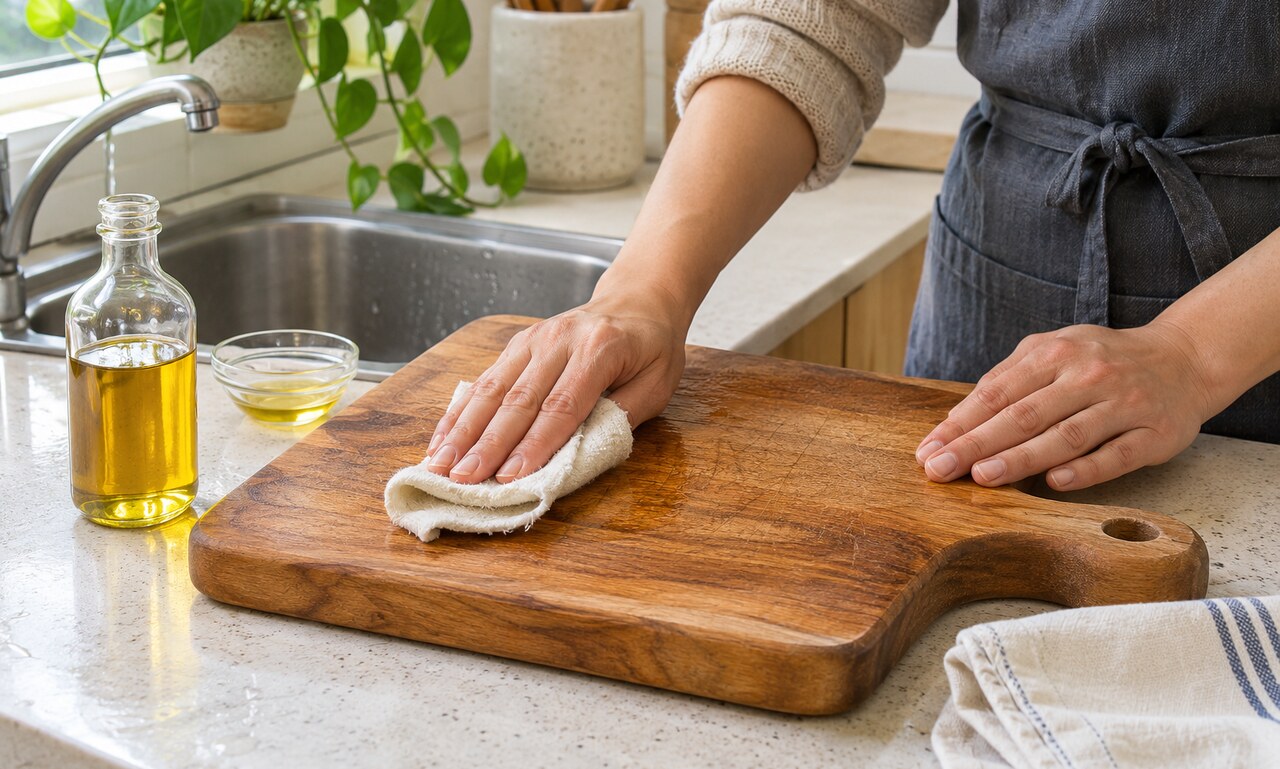
Food-grade mineral oil is a common choice because it does not readily become rancid. Apply a thin layer to clean, dry wood, covering the edges and both faces. Let it absorb, then wipe away anything left on the surface. A new board may need several early applications; an established one only needs attention when it looks chalky or absorbs water unusually quickly.
Cooking oils such as olive or vegetable oil can develop unpleasant odors over time. Products intended specifically for cutting boards provide a more predictable result.
Know when damage needs attention
Light knife marks are normal. Deep cracks, separated seams or areas that remain rough and difficult to clean deserve closer inspection. A badly split board should be replaced, while a sound solid board can often be sanded and refinished.
Wooden board care is mostly about avoiding extremes. Brief washing, open-air drying and occasional oiling preserve the surface while allowing the board to remain what it should be: an everyday kitchen tool.
READ NEXT