Subtitles appear to perform a simple task: place the meaning of spoken dialogue at the bottom of the screen. Yet anyone who has compared two subtitle versions knows that the work is full of choices. The words affect what the viewer notices, when a joke lands and how quickly a scene seems to move.
Reading changes the path of the eye
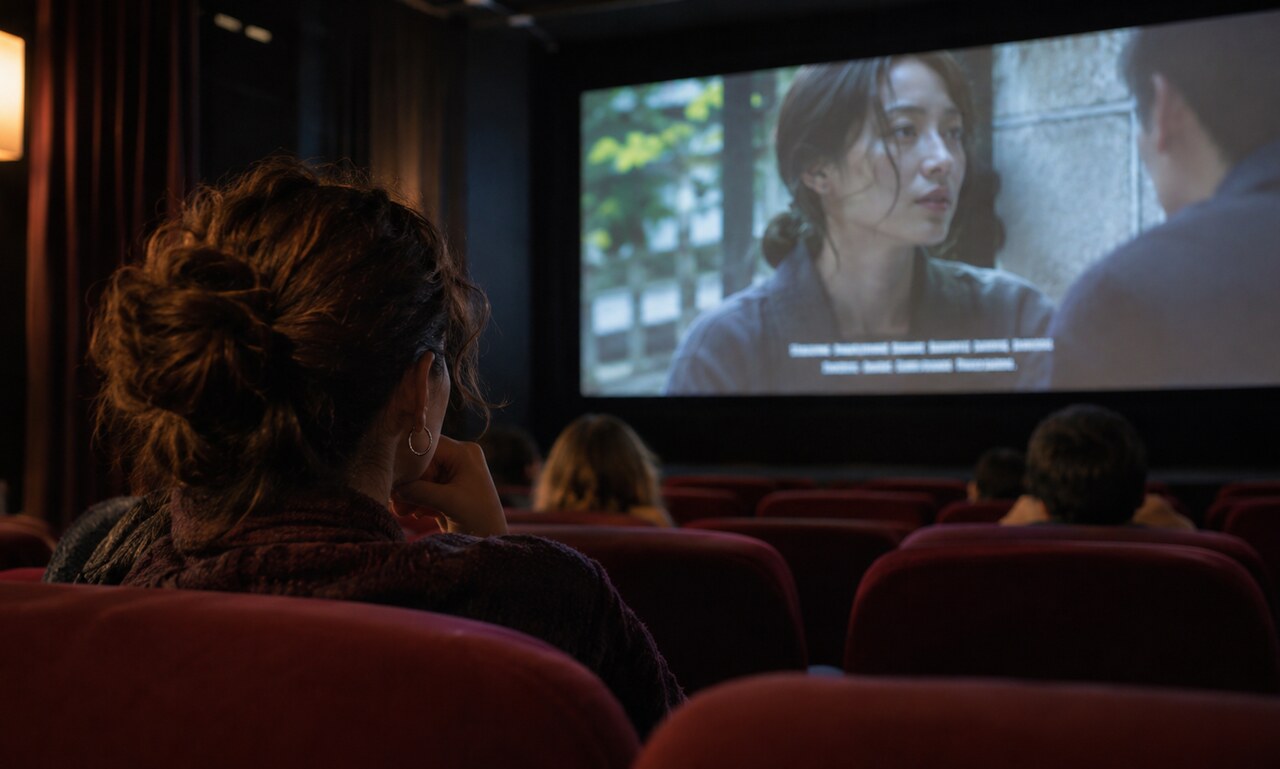
Without subtitles, viewers may look first at a face, a hand or an object in the background. With them, the eye moves repeatedly between the image and the text. Good placement, timing and line length make that movement feel natural. Crowded captions can hold attention too long, while poorly timed ones can reveal a surprise before it occurs.
This is why subtitle design belongs to the visual experience of a film. Font size, contrast and position determine whether the words are readable without overwhelming the frame.
Not every spoken word can fit
People often speak faster than viewers can comfortably read. Subtitlers may need to condense a line while preserving its purpose. Repetition, hesitation and filler can sometimes be reduced, but removing too much can flatten a character's personality.
Humor creates another challenge. A pun may have no direct equivalent, and a cultural reference may need a concise substitute. The strongest choice is not always the most literal one. It is the line that preserves the scene's intention within the time and space available.
Sound still carries meaning
Even when viewers do not understand the spoken language, they hear tone, pace, breath and silence. Subtitles work beside those qualities rather than replacing them. An angry sentence delivered softly feels different from the same words shouted. A pause can contradict the confidence of the written line.
Closed captions add another layer by identifying important sounds and speakers for viewers who cannot rely on the soundtrack. Clear descriptions should convey useful information without trying to explain every detail.
Every version is an interpretation
Different releases may contain different translations because each team makes its own judgments about tone, clarity and cultural context. Those variations remind us that subtitles are authored, edited and timed by people.
When they work well, subtitles seem almost transparent. But they are never absent from the experience. They create a second rhythm across the screen, guiding viewers through language while leaving the image and performance room to speak.
READ NEXT