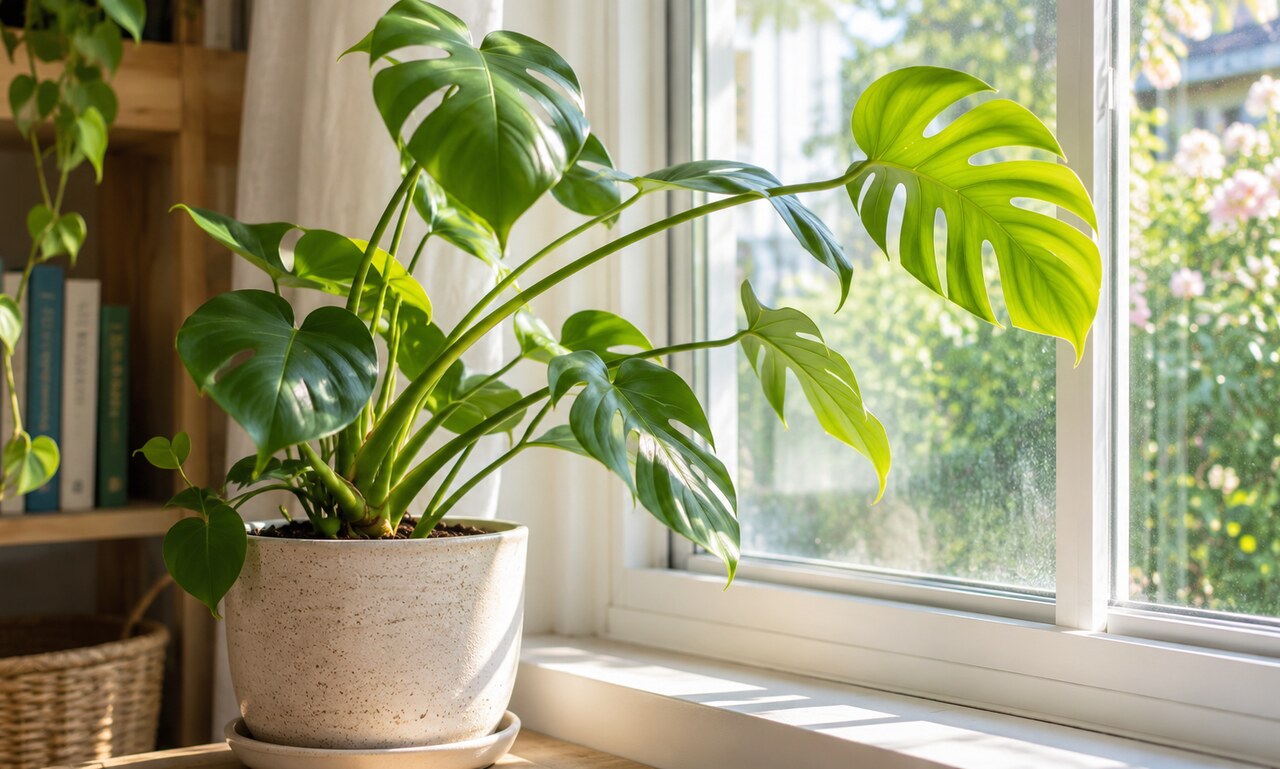
A houseplant placed beside a window rarely stays perfectly symmetrical. New leaves face the glass. A stem gradually bends. Over time, the whole plant may seem to be reaching across the room.
This response is called phototropism. The plant is not moving toward light in the way an animal crosses a space. Instead, it changes how its cells grow, creating a bend that places leaves in a better position to capture light.
Light becomes a direction
Plants contain light-sensitive proteins that help them detect where illumination is coming from. When a young stem receives stronger light on one side, growth-regulating signals become distributed unevenly across it.
Cells on the shaded side of many stems lengthen more than cells on the brighter side. Because one side grows faster, the stem curves toward the light source. The result looks like a deliberate lean, but it is produced by unequal growth.
Why the response matters
Leaves use light to power photosynthesis, the process through which plants build sugars from carbon dioxide and water. A stem that positions its leaves more effectively can improve access to that energy source.
Roots often show a different pattern. Their growth is strongly influenced by gravity, moisture and the structure of the soil. The plant is coordinating several environmental signals at once: stems generally move into useful light, while roots move into a medium that provides water, minerals and support.
A window creates an uneven world
Outdoors, light changes direction as the Sun moves and may be filtered by neighboring plants. Indoors, a window can become one dominant source. That makes the curve of a houseplant especially noticeable.
Rotating a pot can encourage more even growth, but it should be done gradually for plants that are sensitive to changing conditions. A sudden move from dim light to intense direct sun can damage leaves even when the species generally prefers a bright location.
Read the whole plant
Leaning alone does not tell the entire story. Long gaps between leaves, pale growth or very small new leaves may suggest that a plant needs more suitable light. Brown patches can have several causes, including too much direct sun, watering problems or stress unrelated to illumination.
The useful habit is to observe changes over time. Note which direction new growth takes, how quickly the soil dries and whether leaf color remains stable. The plant is continuously responding to its environment, and its shape records part of that response.
A stem angled toward a window may seem ordinary. Look closely, however, and it becomes a slow demonstration of perception without eyes and movement without muscles: light translated into growth.
READ NEXT