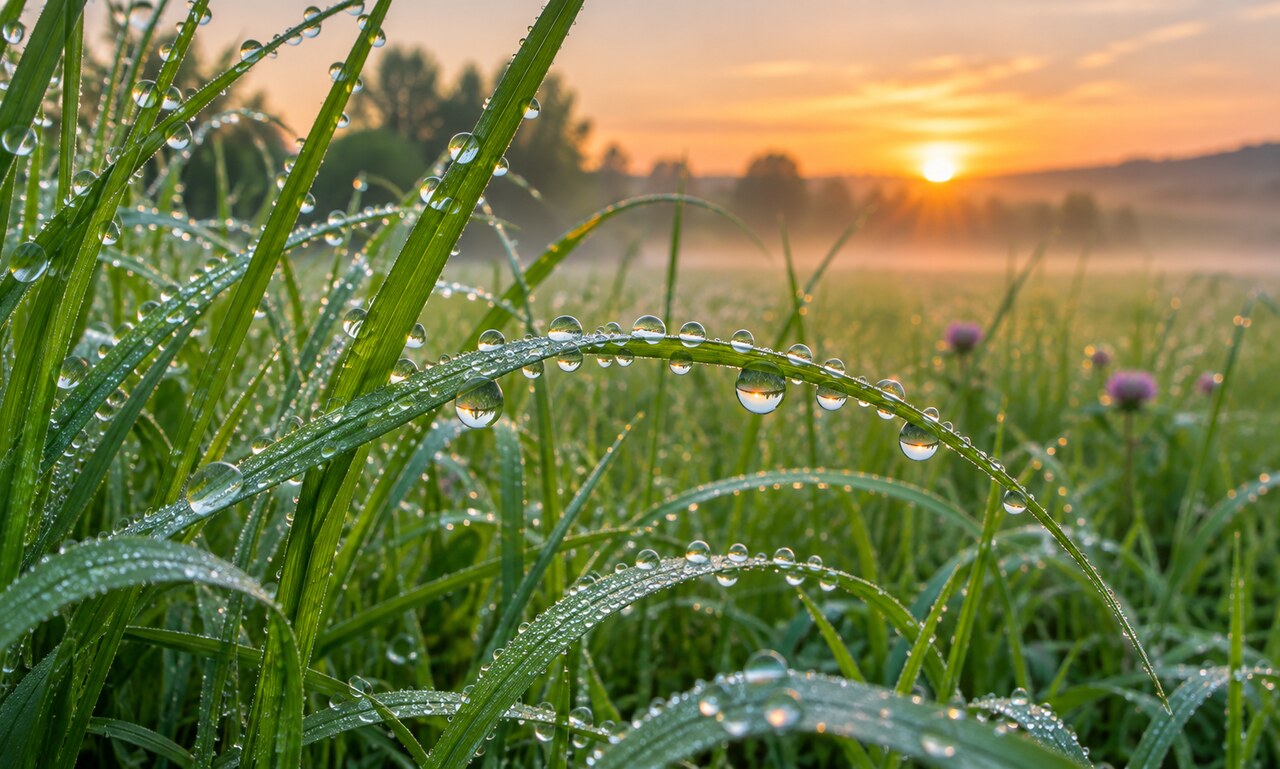
Grass can be wet at sunrise even when no rain fell overnight. Clear droplets collect along leaves and spider webs, catching the first light. The water was already present in the air as invisible vapor.
Dew appears when a surface cools past a particular threshold.
Surfaces lose heat at night
After sunset, the ground and objects near it release energy. On a clear, calm night, they can radiate heat toward the open sky faster than surrounding air replaces it. Thin leaves and blades of grass cool especially well because they have a large surface area.
The grass may become colder than the air measured a short distance above it. That local temperature difference matters.
The dew point marks the change
Air can contain water vapor, but the amount it can hold depends on temperature. As air next to the cool grass loses heat, it may reach the dew point: the temperature at which the air becomes saturated under those conditions.
Further cooling causes some vapor to condense as liquid water on the surface. Tiny droplets join and grow, producing the familiar beaded appearance.
Weather controls the amount
Clear skies favor strong nighttime cooling. Light wind can bring fresh moist air into contact with the surface, but stronger wind tends to mix warmer air downward and reduce cooling. Humid air reaches saturation more easily than dry air.
Clouds can act like a blanket by returning some outgoing energy toward the ground. This often keeps surfaces warmer and makes heavy dew less likely.
Dew is not the only source of droplets
Some plants release liquid water from their leaf edges through a process called guttation. Those droplets come from inside the plant and often appear near veins or tips. Dew condenses from the surrounding air and can coat many kinds of surfaces, including metal, glass and spider silk.
If the surface temperature falls below freezing, water vapor can form frost rather than liquid dew, depending on conditions.
Morning dew records the balance between moisture, temperature, wind and the night sky. The droplets may be small, but they show that a surface can create its own immediate climate, just a few centimeters above the ground.
READ NEXT