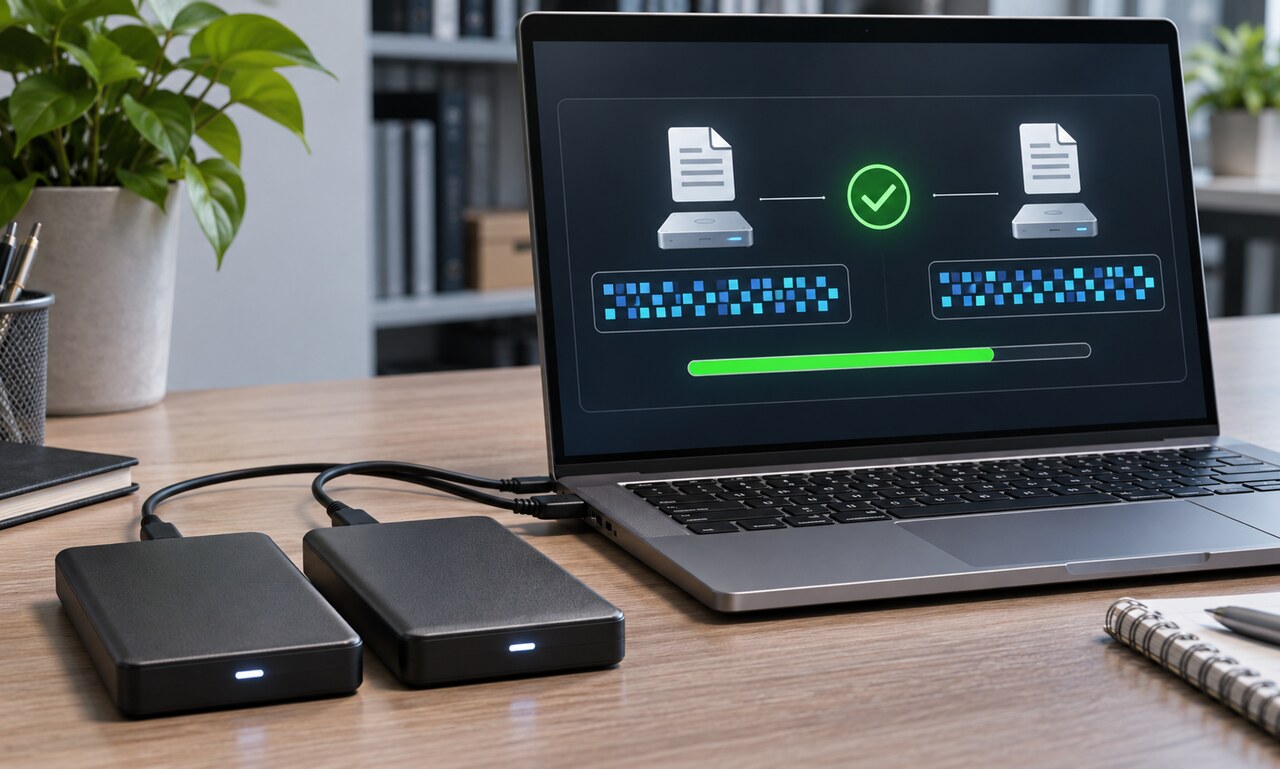
A file can look intact after a download or transfer. Its name is correct, its size seems plausible and the application may begin to open it. Yet a dropped bit or incomplete copy can quietly damage the contents.
A checksum offers a fast way to test whether the file that arrived matches the one that was sent.
A file becomes a compact value
A checksum algorithm reads the file's data and calculates a fixed-length result, often displayed as a sequence of letters and numbers. Run the same algorithm on an identical file and it produces the same result.
Change even a small part of the file and the calculated value will usually change. That sensitivity makes the checksum useful as a fingerprint for comparison, even though the fingerprint is far shorter than the file itself.
Comparison reveals a bad transfer
Software publishers sometimes display a checksum beside a download. After saving the file, a user can calculate its checksum locally and compare the two values. A match provides strong evidence that the download was not altered in transit. A mismatch means the file should not be trusted or used until it is downloaded again from a reliable source.
The same technique helps when copying archives between drives or checking long-term storage. Automated systems can calculate values before and after a move, then flag anything that changed.
Not every checksum serves the same purpose
Simple checksums are designed mainly to catch accidental errors and may be quick to calculate. Cryptographic hash functions are built to make deliberate manipulation much harder to hide. For software downloads or other security-sensitive material, a modern cryptographic hash is the more appropriate comparison.
A checksum is not encryption. It does not conceal the file, and the short value cannot be used to reconstruct the original contents.
The reference must be trustworthy
A comparison is only as reliable as the expected value. If an attacker can replace both a file and the checksum displayed beside it, the two may still match. The published hash should therefore come from a trusted page or authenticated channel. Digitally signed releases can provide a stronger check of who produced the file.
Checksums turn an invisible question into a clear test. Instead of assuming that a copy is complete, a user can compare two short values and find damage before it becomes a failed installation, a broken archive or a lost record.
READ NEXT