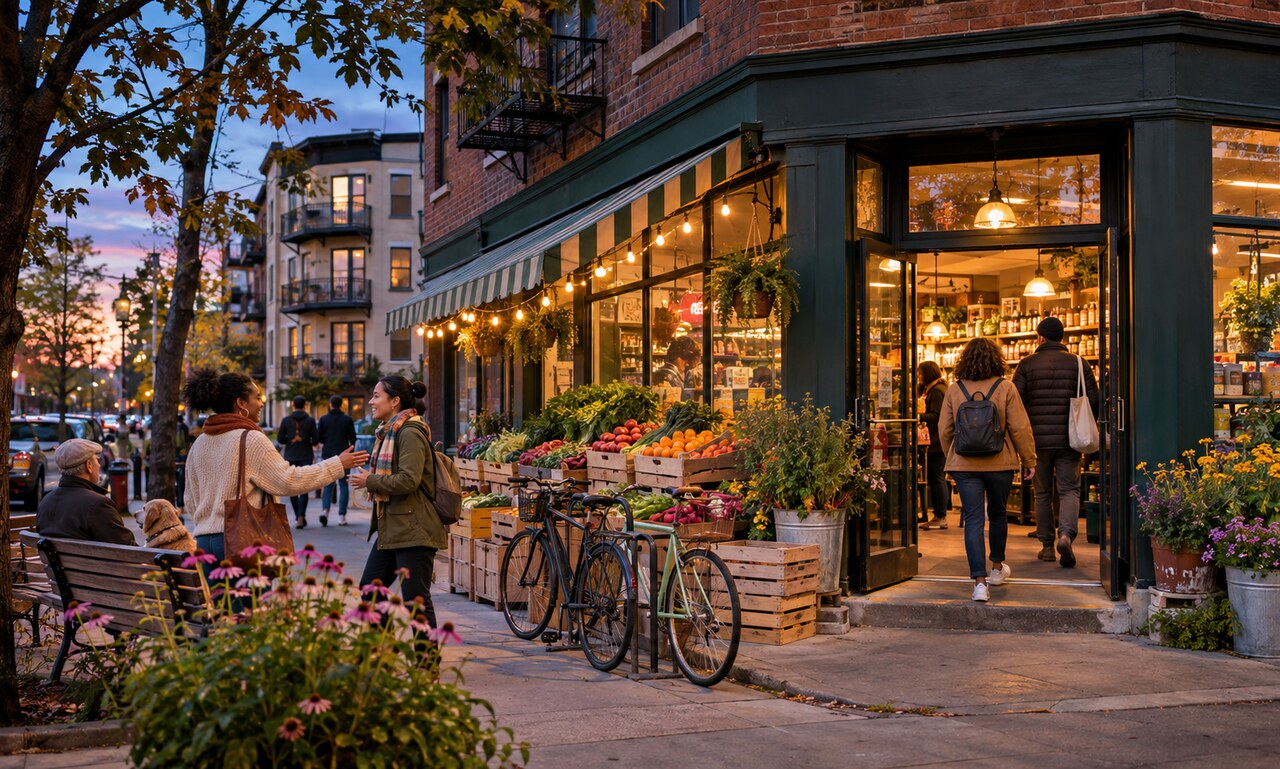
A corner store may occupy only one narrow storefront, but its role can extend across an entire neighborhood. It provides milk without a car trip, receives a quick visit after school and keeps a familiar light on when many other businesses are closed.
Its value is not measured only by the variety of products on the shelves. Proximity itself is a service.
Small distance changes daily choices
When basic goods are available within a short walk, an errand can fit into the edge of another activity. It happens on the way home, between appointments or during a conversation with a neighbor.
That convenience matters especially to people who do not drive, have limited mobility or cannot easily turn every missing item into a long shopping trip. A nearby store gives the neighborhood a small degree of practical resilience.
Familiarity creates informal knowledge
Regular customers and shopkeepers recognize patterns. They notice when a product is repeatedly requested, when a delivery is late or when someone has not appeared at the usual time. This is not formal public service, and it should not be romanticized as a substitute for one. It is a form of everyday awareness created through repeated contact.
The counter can also become a place where information travels: a local event, a lost key, a business opening or a change to the bus route.
The storefront contributes to the street
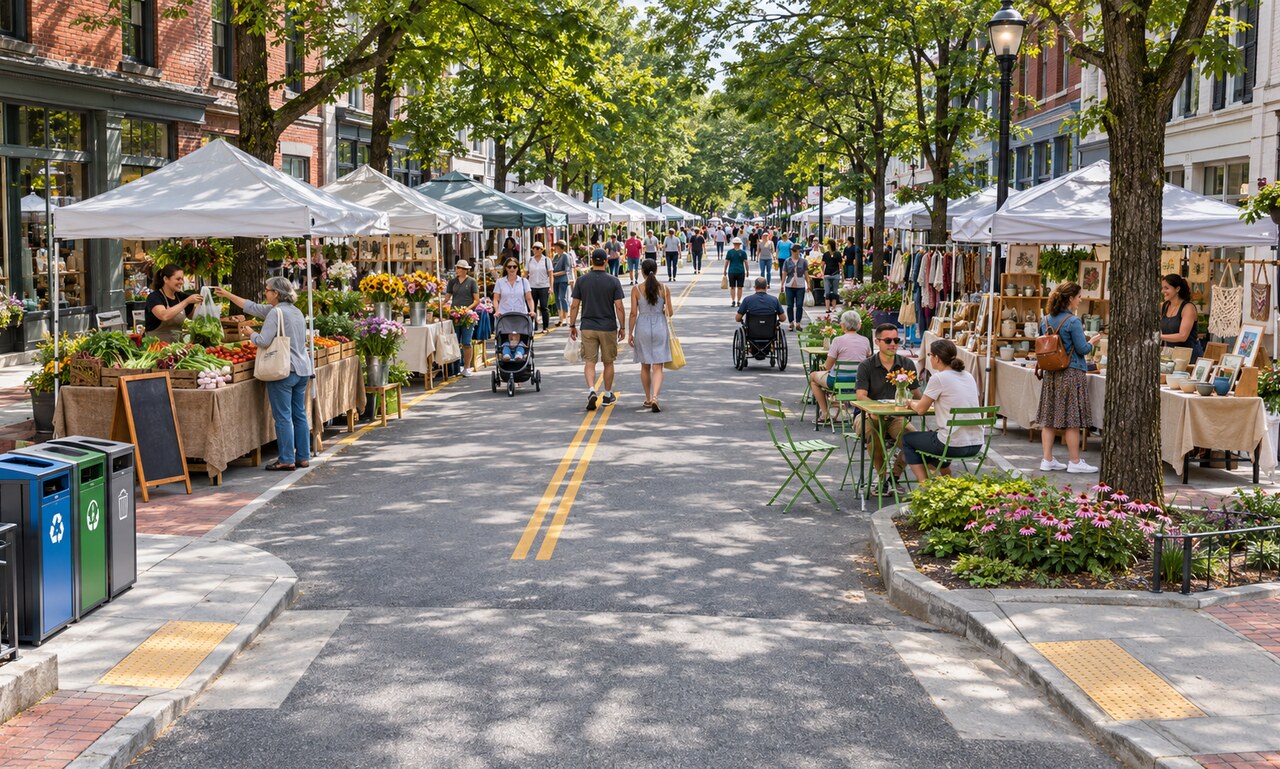
An active entrance gives pedestrians a destination and places more eyes on the sidewalk. A display, produce crate or bench can make a blank stretch of frontage feel inhabited.
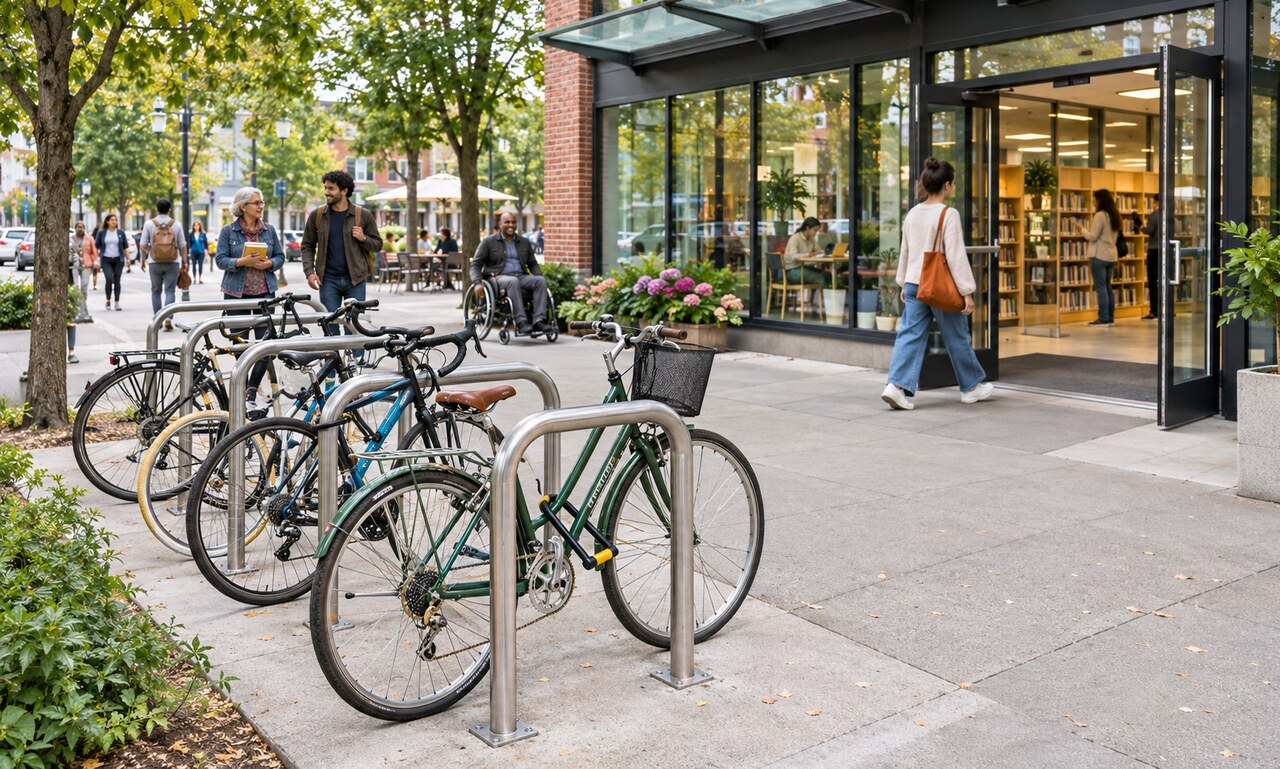
Design matters. Clear windows help the store and street remain visually connected. Safe crossings, bike parking and accessible entrances determine who can reach it comfortably. The business may be small, but its usefulness depends on the public space around it.
Convenience has limits
Small stores often charge more than large supermarkets because they buy in lower volumes and operate with limited space. Their selection may not meet every household need. Long hours can also place heavy demands on owners and workers.
Supporting neighborhood retail therefore requires more than nostalgia. Affordable commercial rents, reliable deliveries, flexible local rules and a stable customer base all shape whether a shop can survive.
A city needs useful places nearby
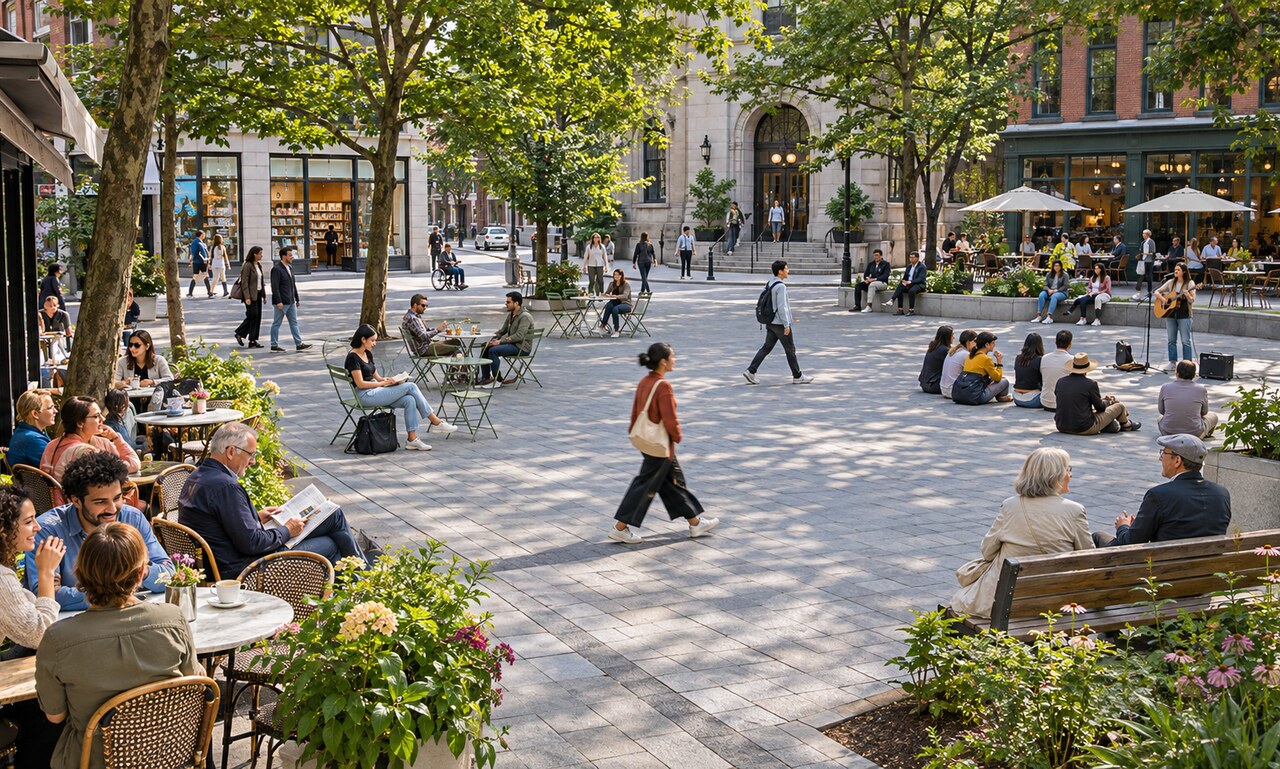
The corner store is one example of a broader urban principle: daily life becomes easier when common needs are close to home. Libraries, parks, clinics, schools and shops each contribute a different kind of access.
A neighborhood is not complete because it photographs well from above. It works when ordinary needs can be met at street level. The corner store earns its place in that system one small errand at a time.
READ NEXT