A concert poster begins as an announcement. It needs to tell people that a performance is happening, where to find it and when to arrive. Once the date passes, that practical job disappears. What remains is something closer to a memory.
The paper carries more than a band name. Its type, color and printing method reveal how a scene wanted to present itself at a particular moment.
Design creates expectation
Before anyone hears the first note, a poster suggests what the music might feel like. Dense hand lettering can promise urgency. A single photograph may create mystery. Rough photocopy texture can make a show feel immediate and local, while a carefully illustrated print can turn the event into a collectible object before the doors open.
The most effective posters do not simply describe sound. They build an atmosphere around it. Their visual choices become part of how the audience imagines the night.
The wall becomes an archive
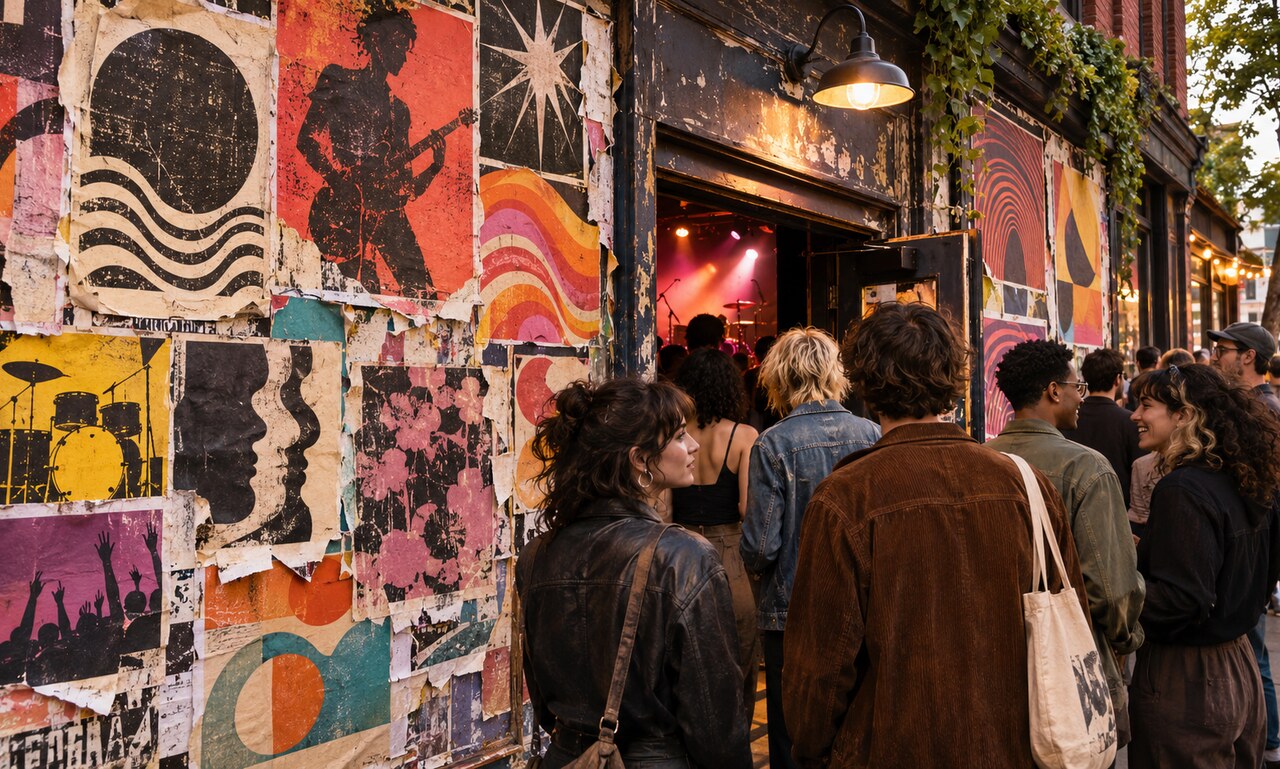
Posters usually appear together: layered on a record-store window, taped to a venue wall or pasted over the fading remains of last week’s events. In that setting, they record the rhythm of a cultural district.
A wall can reveal which rooms hosted live music, which artists shared a bill and how frequently people gathered. Even a torn poster contributes information. Its weathered surface shows that the announcement belonged to a real street rather than only to a digital feed.
Small runs create lasting objects
Many concert posters are produced quickly and in limited quantities. Screen printing, letterpress and inexpensive copying each leave a different physical character. Slight variations in ink or alignment make individual copies feel connected to the process that created them.
That material quality helps explain why people keep them. A poster can become a record of attendance, friendship or discovery. The corner folded during the trip home may matter as much as the printed design.
Preserving the scene
Paper is vulnerable to sunlight, moisture and adhesive damage. A poster worth keeping should be stored flat or framed with materials that do not discolor it. Photographing or scanning the design also preserves access when the original is too fragile to display.
Context deserves preservation too. A date, venue and list of performers may be obvious now but difficult to reconstruct years later. A brief note on the back can turn decoration into a useful cultural record.
A concert ends by design. The poster survives because it was never only an advertisement. It is evidence that music occupied a particular room, on a particular street, for one unrepeatable night.
READ NEXT