A kitchen counter attracts objects because it is convenient. Mail lands there. Small appliances remain ready. Groceries wait to be put away. Each item makes sense on its own, yet together they can remove the space needed for the room’s main task.
Keeping one section clear is a modest rule with an outsized effect. It creates a reliable place to begin.
Choose the most useful section
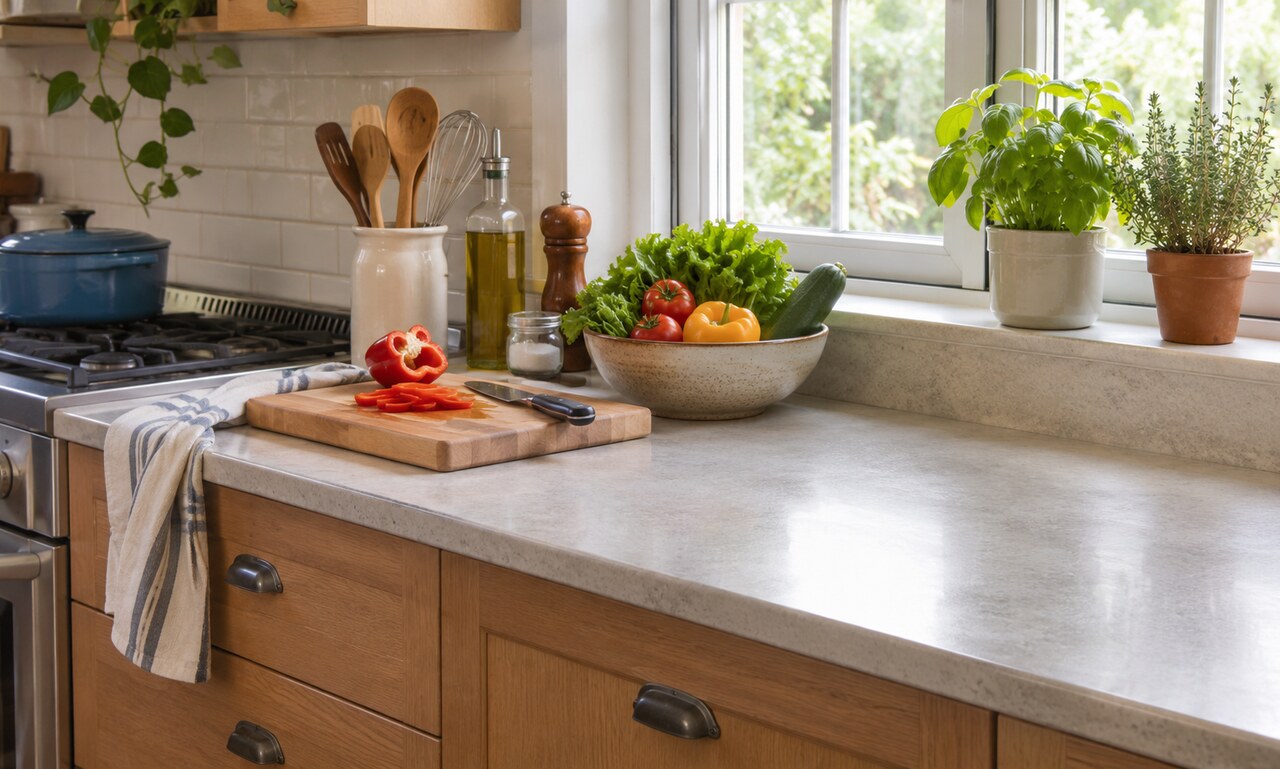
The best clear zone is close to the sink, stove or refrigerator, but not directly in the path of splashes and heat. It should be wide enough for a cutting board and deep enough to work without balancing ingredients at the edge.
Do not start by emptying every surface. Select one working area and protect it. A realistic boundary is easier to maintain than a total transformation.
Move tools to the point of use
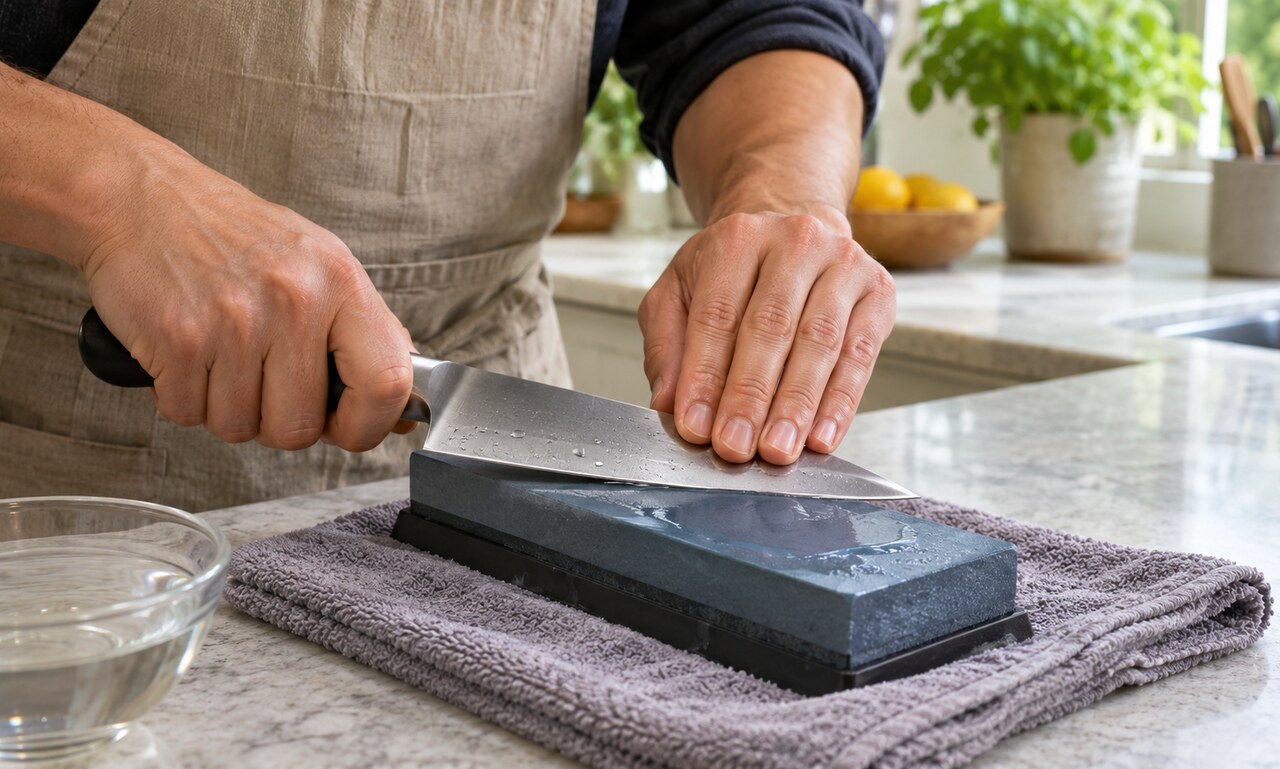
Items that support daily cooking can stay nearby without occupying the workspace. Knives can live in a drawer or wall-mounted holder. Frequently used utensils can stand beside the stove. Oils and spices can share a small tray that moves as one unit.
The goal is not visual emptiness. It is reducing the number of objects that must be relocated before a task can begin.
Give incoming items another landing place
A counter often becomes cluttered because the household lacks a better arrival zone. A shallow basket for mail, a hook for keys or a shelf near the entrance can intercept objects before they reach the kitchen.
Watch what repeatedly appears in the clear zone. The pattern identifies a storage problem elsewhere. Solving that problem is more effective than moving the same pile every evening.
Reset in minutes, not hours
After cooking, return the area to a usable state: discard scraps, wash the cutting board and wipe the surface. The reset should be short enough to happen even when the rest of the kitchen is not perfect.
A clear counter also makes partial progress possible. Breakfast can be prepared while dishes remain in the rack. Groceries can be sorted without first reorganizing a room.
Make usefulness visible
An open surface may appear unfinished to someone accustomed to filling every space. Its purpose is the activity it permits. The counter is holding possibility rather than decoration.
One clear section will not create more cabinets or solve every household routine. It does create a dependable starting point. In a working kitchen, that small certainty can matter more than perfect order.
READ NEXT