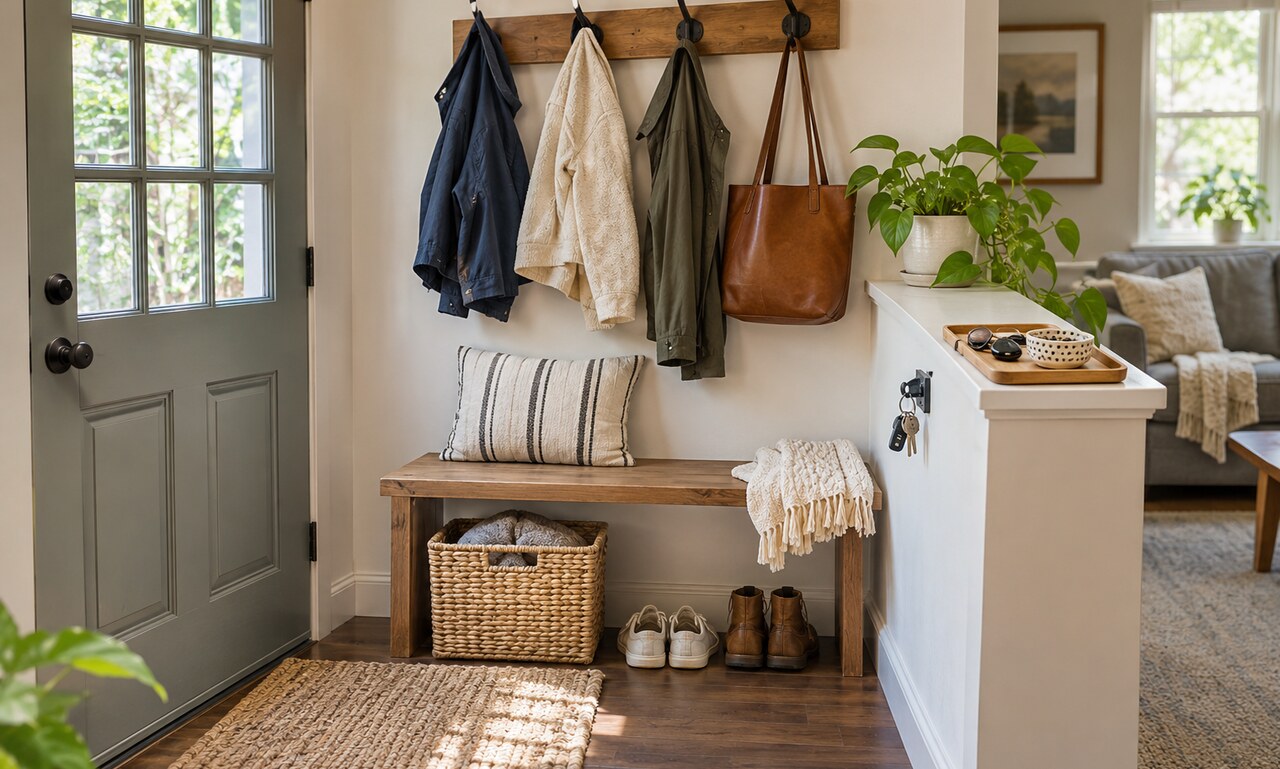
Objects accumulate near an entrance because arrival is a transition. Shoes come off, keys leave the hand and mail needs somewhere to wait. Without a clear destination, those items travel to the nearest table or kitchen counter.
A useful drop zone gives the routine a physical address.
Start with what actually arrives
Observe the entrance for several days. List the things that regularly appear: keys, bags, shoes, coats, packages or children’s school items. Design for that real pattern rather than for an idealized empty hallway.
Keep the setup small. A tray, hooks and one basket may solve most of the problem.
Match storage to the movement
Hooks should be easy to reach while entering. A tray for keys should sit between the door and the next room. Shoes need a surface that can handle dirt and moisture without creating a tripping hazard.
If an item is repeatedly left beside its intended storage, the location or container is probably inconvenient. Move the solution closer to the habit.
Separate urgent from temporary
Incoming paper needs two destinations: material that requires action and material ready for recycling. One small upright holder can keep bills or forms visible without covering a surface.
Packages and returns may need a temporary basket. Empty it on a regular day so the drop zone does not become permanent storage.
Protect the route
The entrance still needs room for people to move, carry groceries and open the door fully. Use wall space where the floor is narrow, and avoid placing furniture where it blocks circulation.
A good drop zone should shorten the arrival routine, not add steps. Its success is measured by how naturally items return to it.
The goal is not a perfect entrance. It is containment: the ordinary disorder of coming home stops in one manageable place instead of following everyone into the house.
READ NEXT