A useful home tool kit does not need to contain a specialized answer for every repair. It needs enough range to tighten a loose handle, hang a picture, assemble furniture and measure a space accurately.
Start with the tasks that actually happen in your home, then add tools when a real need appears.
Choose a compact core
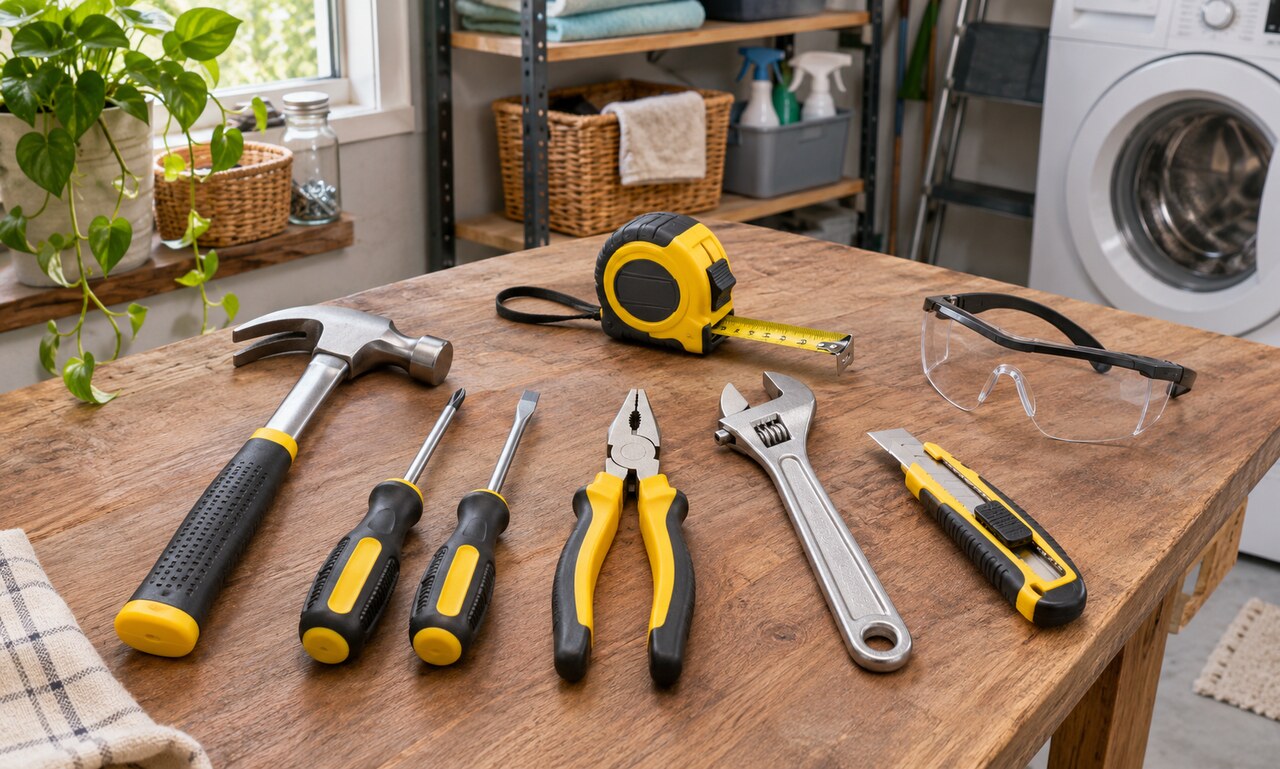
A claw hammer, tape measure, adjustable wrench and pair of combination pliers cover many basic jobs. Add two screwdrivers in common flat and cross-head sizes, or use one sturdy handle with interchangeable bits. A small level helps with shelves and frames.
A utility knife is useful for opening boxes and cutting material, but it should have a secure retracting or folding mechanism. Store spare blades safely. Keep safety glasses with the tools so eye protection is available before work begins.
Match quality to repeated use
The cheapest tool can become frustrating if its handle slips or its jaws do not align. Look for comfortable grips, solid joints and clearly marked measurements. A modest, dependable tool is usually more useful than a large set filled with weak duplicates.
Tools that cut, grip or turn should feel controlled in the hand. If possible, test the weight and movement before buying.
Give every item a place
A small box, zippered bag or shallow drawer keeps the kit together. Group bits and small fasteners in containers so they do not disappear at the bottom. Return tools after each job and wipe away dust or moisture before storage.
Keep the kit accessible to adults who use it but away from young children. Blades, sharp points and small pieces need particular care.
Know when the kit is not enough
Basic tools do not make every repair suitable for a beginner. Work involving a service panel, gas line, structural change or serious water leak may require a qualified professional. Stop if instructions are unclear or if a task depends on equipment and training you do not have.
For routine work, learn from the hardware already in front of you. Check the fastener type and size before applying force. Use the correct tool rather than forcing a near match that could damage the screw or cause a slip.
A simple kit earns its space by being ready, organized and familiar. The goal is not to own more tools. It is to solve small problems carefully with the right few.
READ NEXT